
Beth — 𐤁
Second letter of the Phoenician alphabet
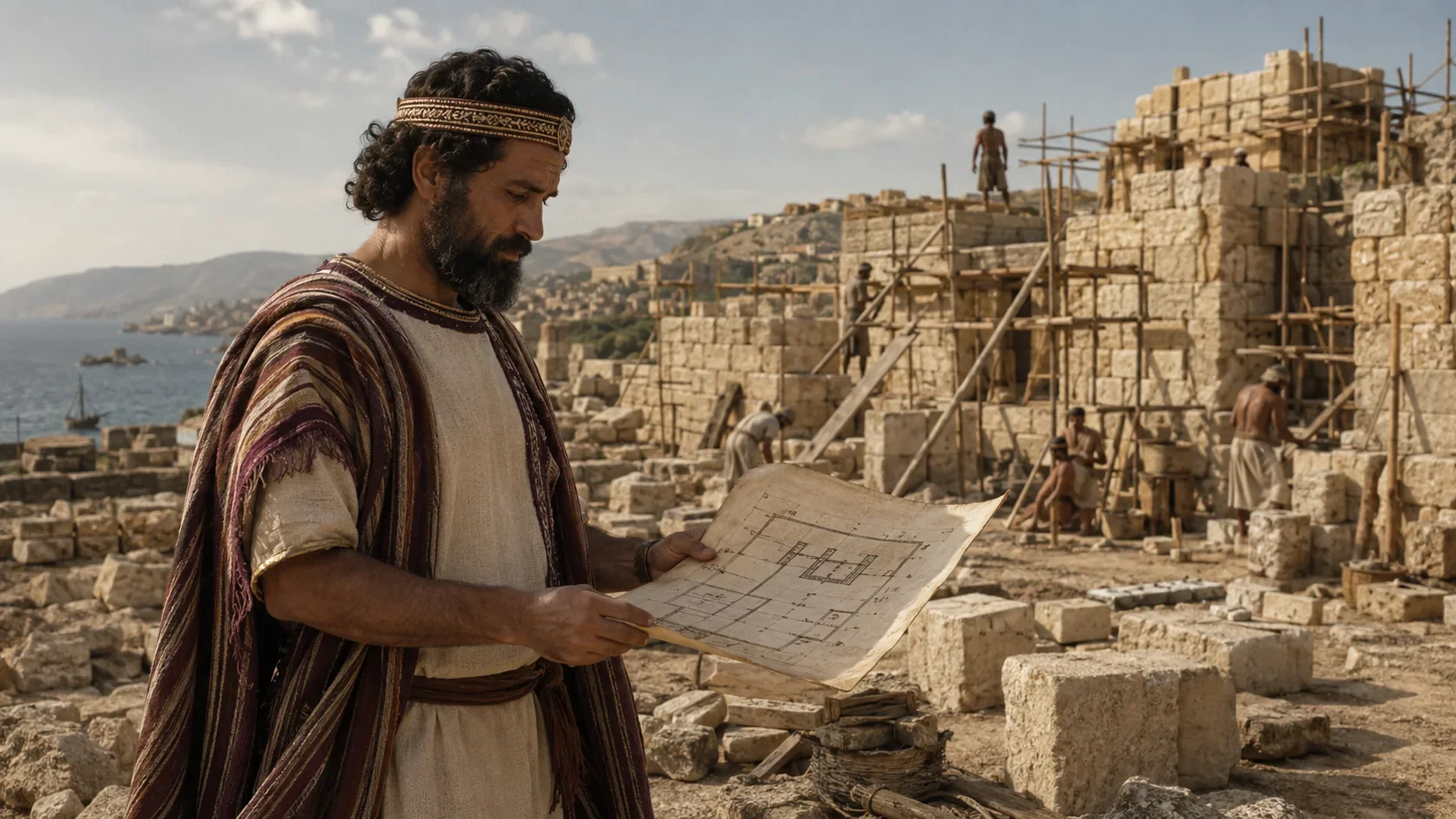
Before B, there was Beth.
𐤁 is the second of the twenty-two letters of the Phoenician alphabet. Its name, Beth, means house.
Behind this abstract form lies a much older image: a built space, represented schematically as the floor plan of a house.
From house to letter
Like Aleph, Beth belongs to a history of writing that begins before the Phoenician alphabet.
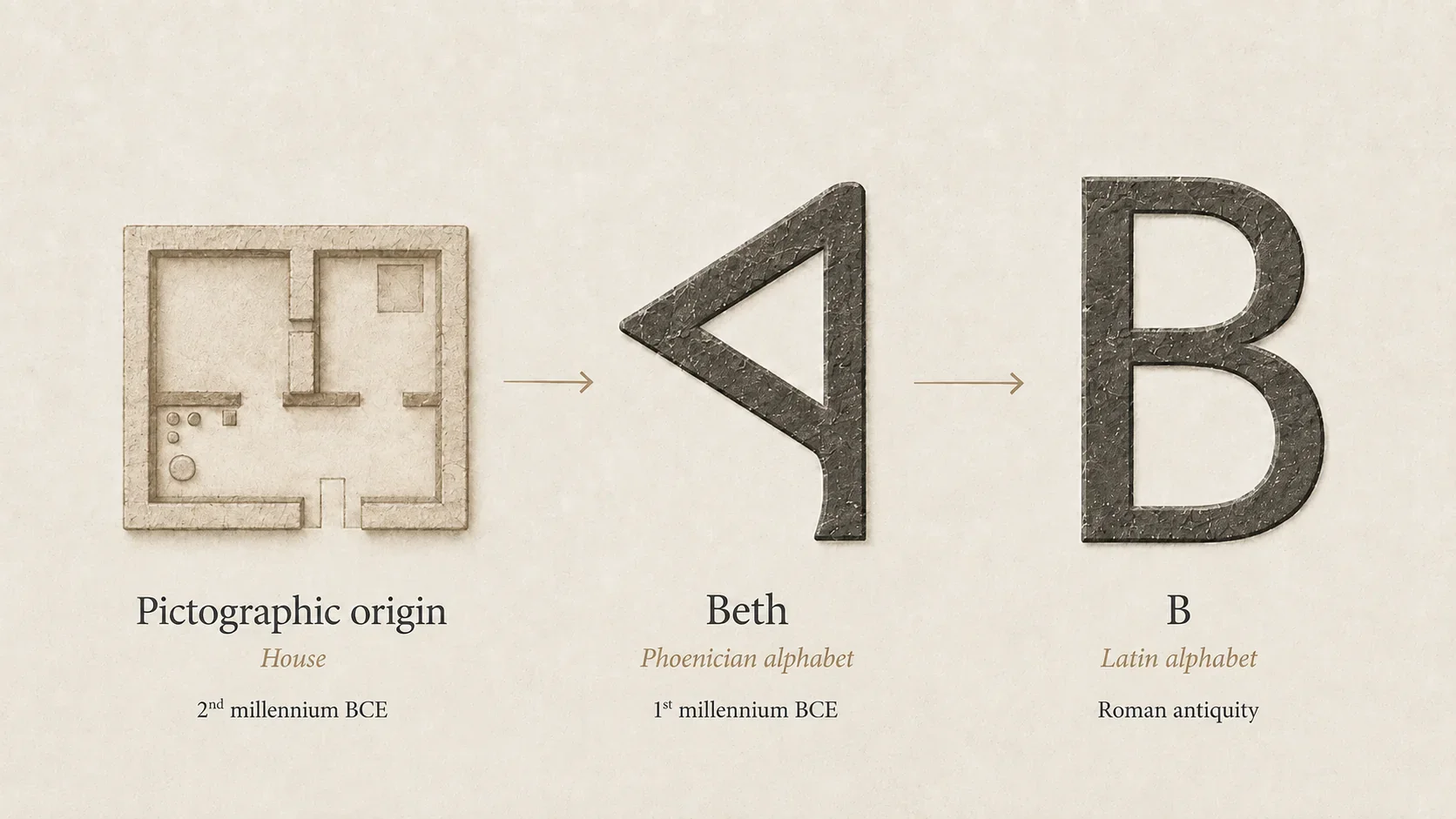
In the earliest alphabetic systems of the ancient Near East, several signs were associated with words from everyday life. In the case of Beth, the word means house, and early forms of the sign have been interpreted as schematic floor plans of a dwelling.
According to the acrophonic principle, the sign takes the value of the first sound of the word it represents.
For Beth, that value is B.
Over time, the representation changes and becomes the Phoenician sign 𐤁.
A house became a written sign.
From Beth to Beta
From the first millennium BCE onward, the Phoenician alphabet is attested across different shores of the Mediterranean.
When the Greeks adapted this alphabet to their own language, they also retained the names and positions of several letters.
Beth became Beta — Β.
Unlike Aleph, whose phonetic function changed in Greek, Beta retained a consonantal value associated with the sound B.
The name of the letter evolved, but its position in the alphabet remained the same: second, after Alpha.
The letter was later transmitted and transformed through the Italic alphabets and into the Latin alphabet.
From this long history came our B.
𐤁 → Β → B
Three forms belonging to different languages and periods, yet part of the same history of transmission and transformation.
Beth and Byblos
In Byblos, the idea of the house echoes the earliest forms of dwelling uncovered on the archaeological site.
Excavations revealed traces of simple structures, sometimes circular and later rectangular, belonging to the first communities to settle permanently on the promontory. The current Visit Byblos archaeological narrative already documents these early dwellings and the continuity of settlement on the site.
Long before the temples, fortifications and monuments that would later shape the city, Byblos was already a place where people built and lived. UNESCO likewise describes Byblos as continuously inhabited since the Neolithic period and as preserving an uninterrupted history of construction.
Beth therefore brings two very ancient histories into dialogue:
the history of writing, and the history of dwelling.
From the house to the Latin B, Beth tells the story of a concrete form becoming a written sign, then being transmitted from one alphabet to another.