
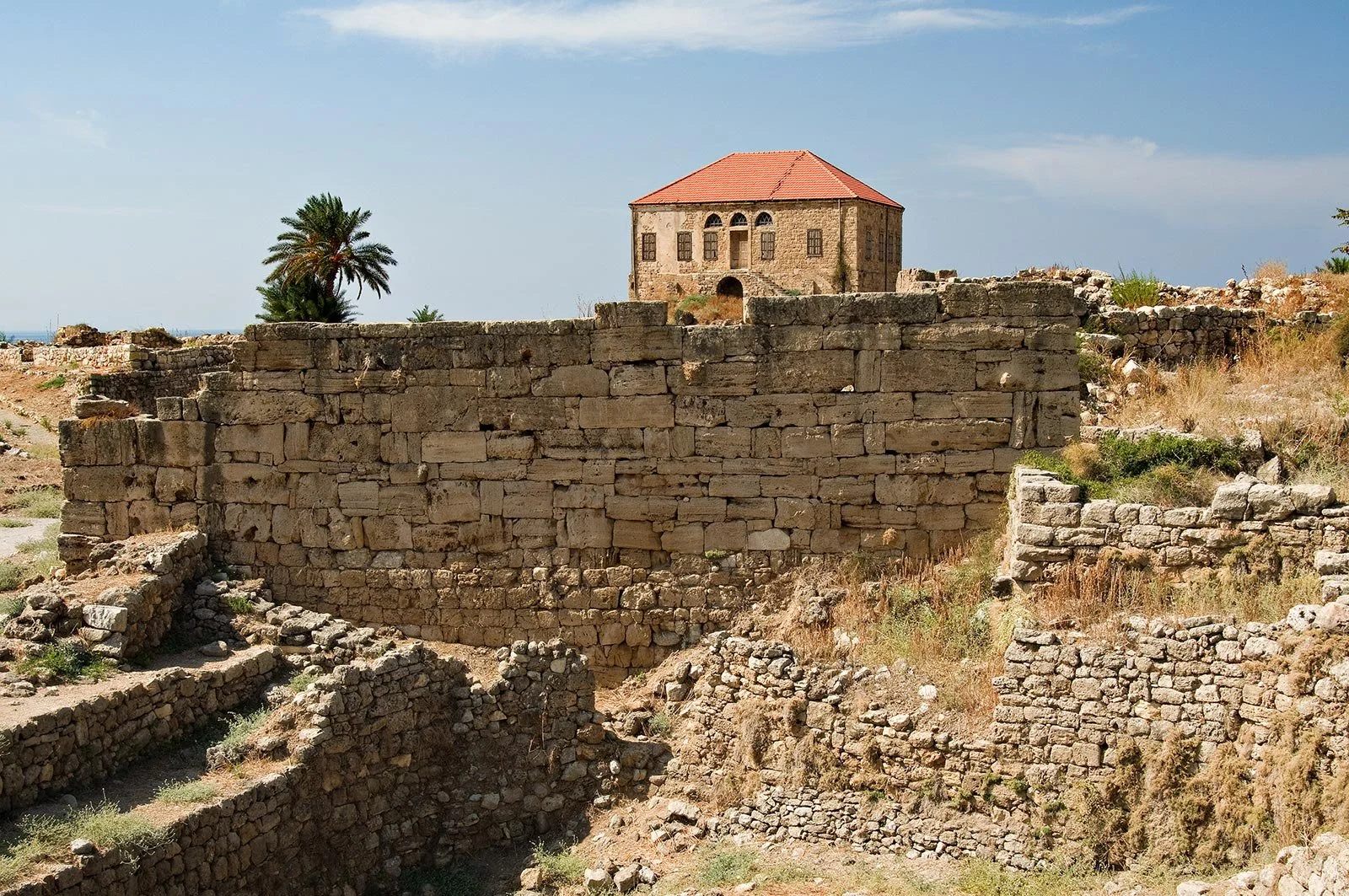
The headland
A simple promontory facing the Mediterranean. This is where it begins.
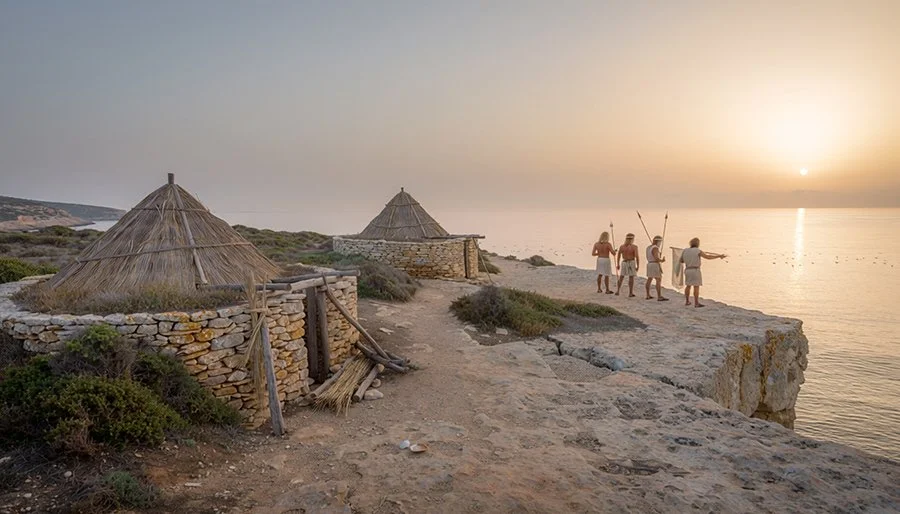
Human groups settled here several millennia ago. Fishermen, probably. They watched the sea, used nearby resources, and built rudimentary dwellings. Little by little, a place took root.
What distinguishes Byblos is not only its age. It is the fact that no one ever truly left.
From the first Neolithic settlements to the present day, the city has changed without disappearing.
The city that faces the sea
Very early on, Byblos did more than exist. It exchanged.
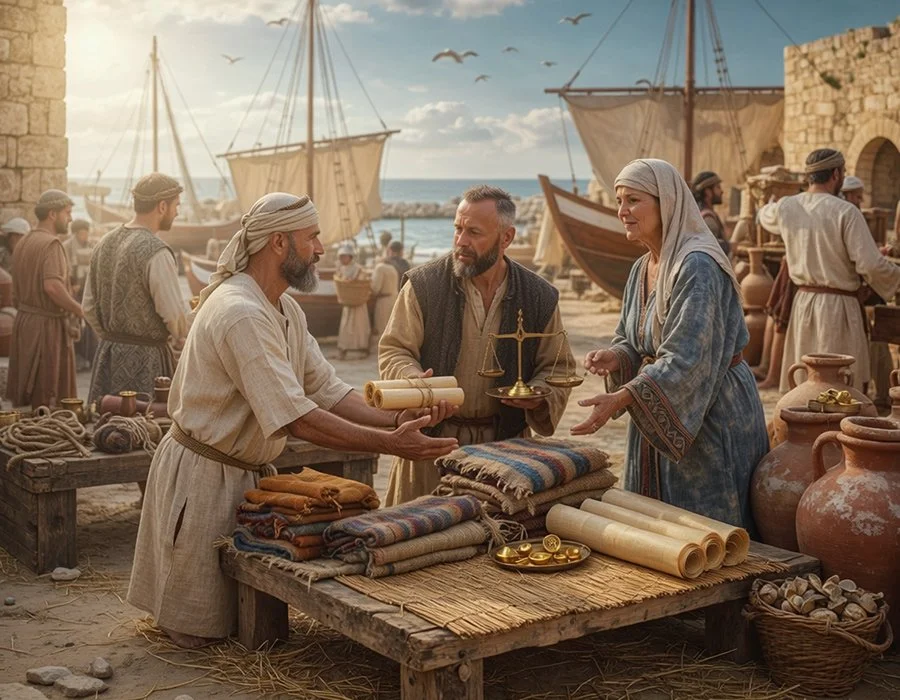
Its inhabitants drew on the resources of the hinterland — cedar, stone, agricultural goods — and developed maritime know-how. The sea became an axis, an opening.
This relationship between the city, its mountain hinterland and the timber trade is explored further in Byblos and the Cedar.
Ships left for the south, toward Egypt. They carried wood, wine, and essential materials. They returned with gold, textiles, and papyrus.
Gradually, Byblos became a point of connection between several worlds.
Archives found in Egypt and across the Near East mention its activity. Diplomatic correspondence, commercial exchanges, and long-term relationships took shape. The city entered a Mediterranean network in formation.
The moment writing begins to change
At one point in its history, Byblos takes part in a discreet but fundamental shift.
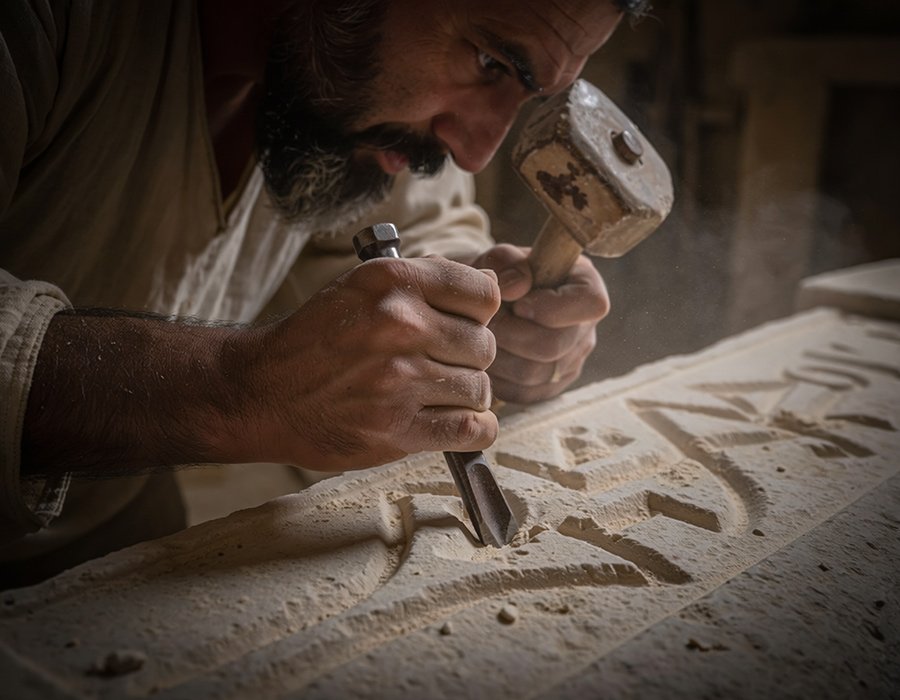
Until then, writing was complex. Existing systems were reserved for elites and for scribes trained over many years.
Then another principle appeared.
A simpler system, based on a limited number of signs. An alphabet.
Inscriptions found at Byblos, especially on the sarcophagus of King Ahiram, testify to this major evolution. This writing system would gradually circulate, transform, and give rise to the alphabets we use today.
What happens here is not only local. It is a lasting transformation in the way societies transmit, store, and organize knowledge.
Build, destroy, rebuild.
The city prospers, is damaged, declines, and rises again.
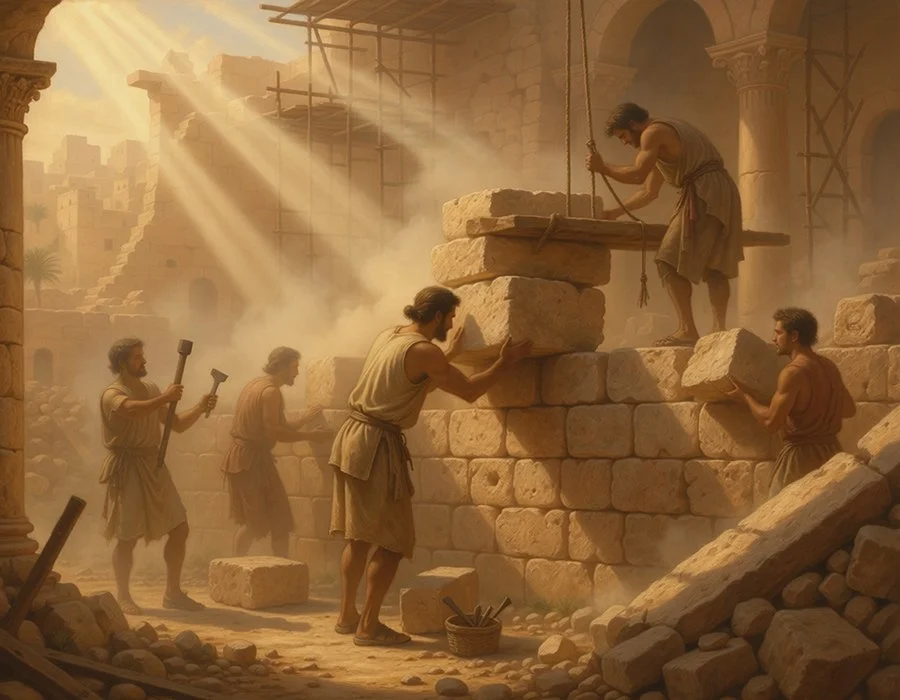
Each period leaves a mark.
The Amorites, Egyptians, Persians, Greeks, Romans, and others after them all alter the city without ever completely erasing it.
Structures accumulate. Uses evolve. A temple becomes a foundation. A street changes function. A stone is reused.
Byblos does not rebuild from zero. It adapts by integrating what came before.
That accumulation is what allows its history to be read today as a succession of visible layers in the landscape.
Changing names, remaining the same city
Goubala. Gebal. Byblos. Giblet. Jbeil.
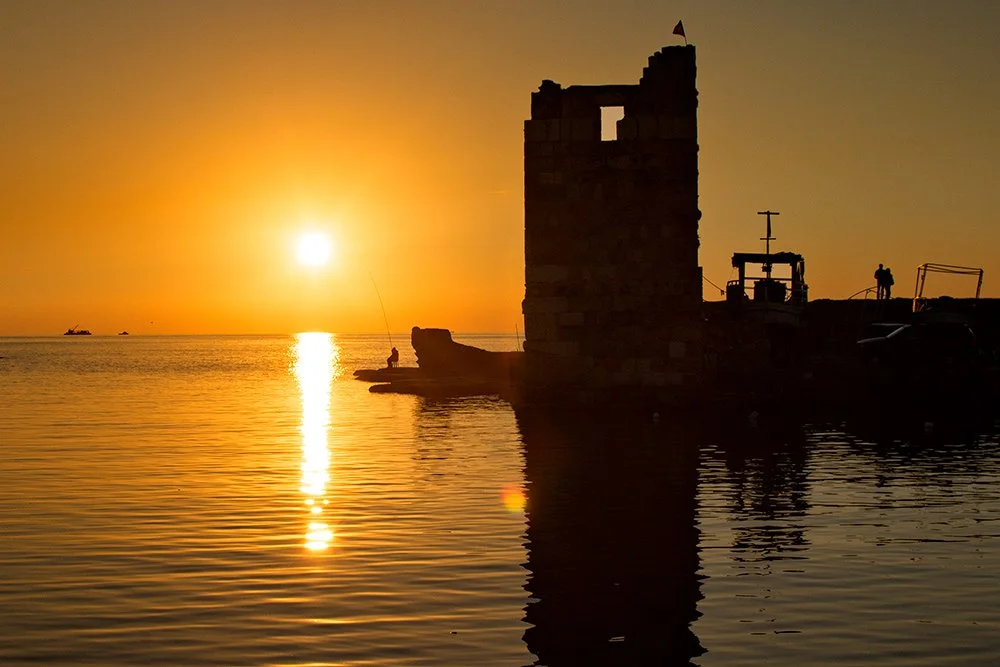
Across the centuries, the city changes its name. Languages evolve, powers succeed one another, identities shift.
But the place remains.
The port is still there. So is the relationship with the sea.
People continue to live, transmit, and inhabit a space filled with memory.
Byblos is not a city frozen in a single era. It crosses periods while preserving a quiet continuity. It remains anchored in human memory.
What remains
At the scale of Byblos, historical events almost become secondary.

What matters most is duration.
A continuous human presence. Constant exchanges with other cultures. An ability to absorb transformation without disappearing.
Byblos cannot be reduced to one period or one civilisation. It is a place where influences meet.
A space where history does not stop, but is passed on.