
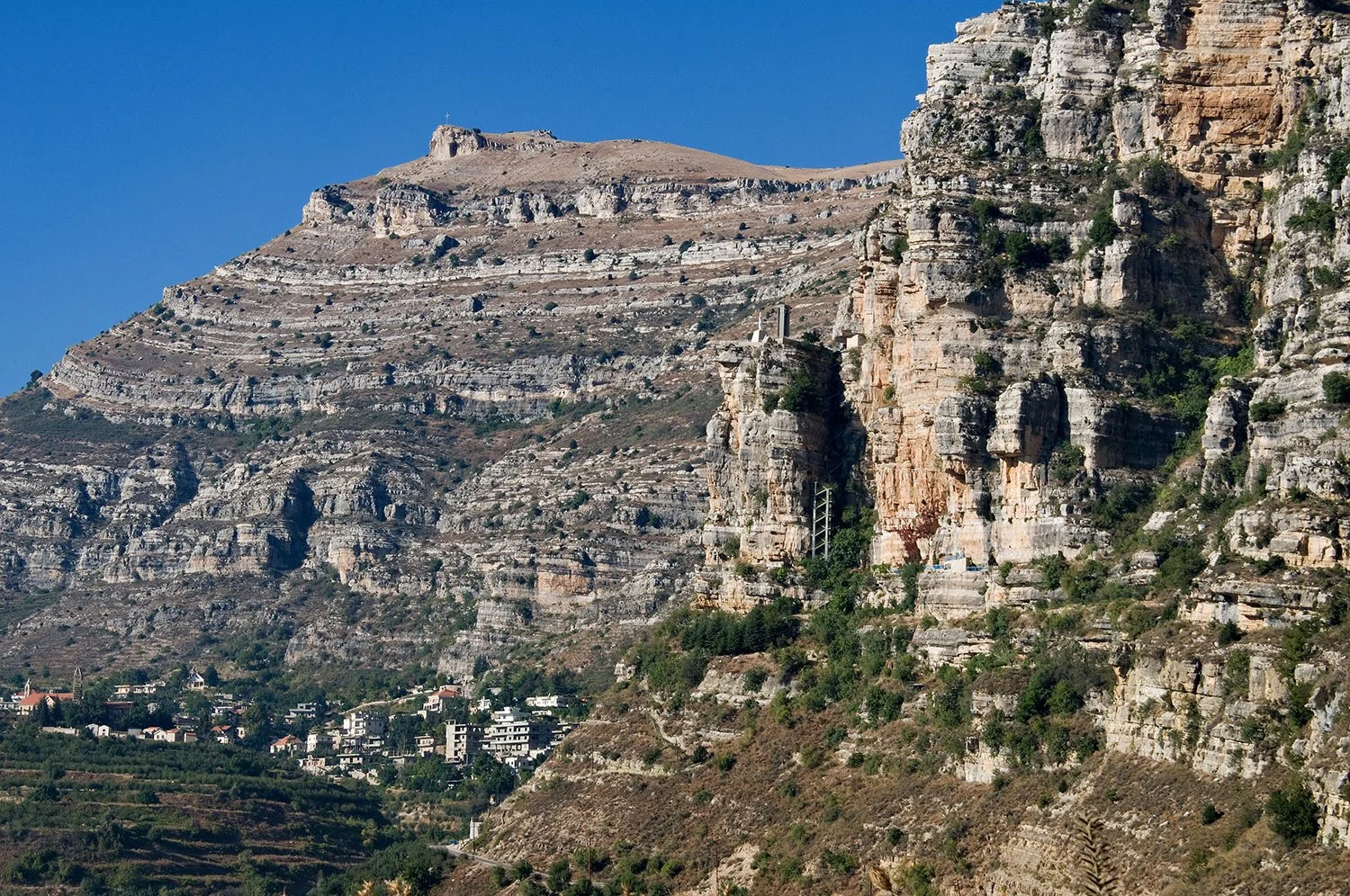
In Byblos, everything seems concentrated around the sea.
Leaving the Byblos
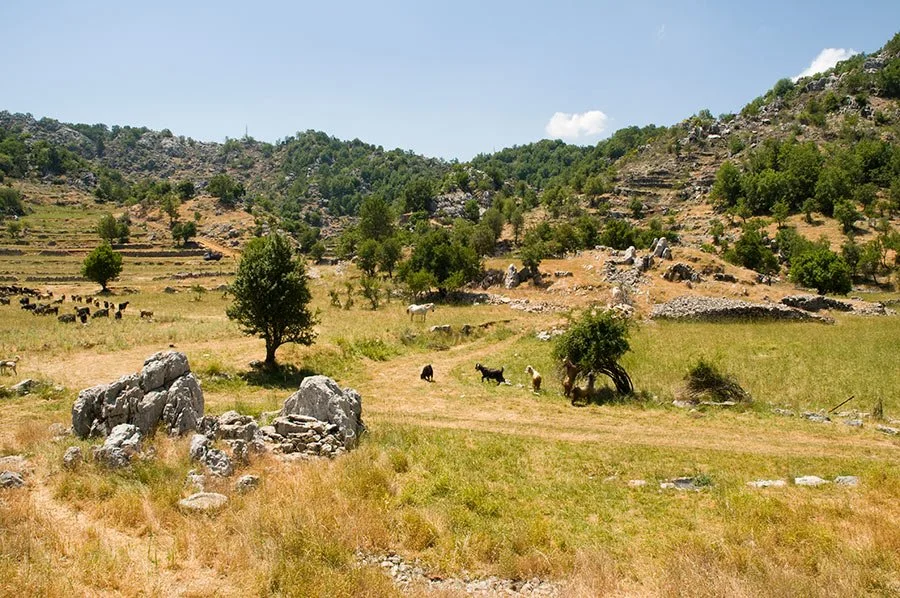
Yet by moving only slightly away, the landscape changes. The city gradually fades, replaced by hills, valleys, and villages clinging to the slopes.
The territory is organised between two natural lines: the Mediterranean to the west and the mountains to the east.
Between them lies a space of movement, cultivation, and passage.
Byblos is not isolated. It belongs to a wider geography that has always shaped its exchanges and development.
Rivers and myths
South of Byblos, a valley opens up.
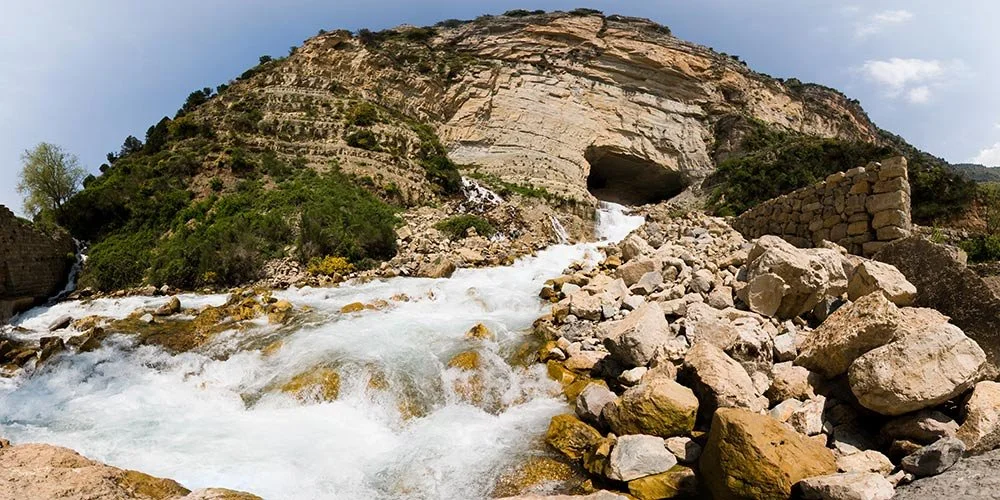
The Nahr Ibrahim, the ancient River Adonis, crosses a green, enclosed landscape shaped by water and rock.
Since Antiquity, the place has been associated with mythological narratives. Some traditions locate here the cycles of death and rebirth linked to Adonis.
Further upstream, the grotto of Afqa marks the river’s source.
The site is not only natural. It is also charged with interpretations, stories, and symbols.
In this way, the territory extends the cultural dimensions already present in Byblos.
Villages et continuities
Around Byblos, villages follow one another.
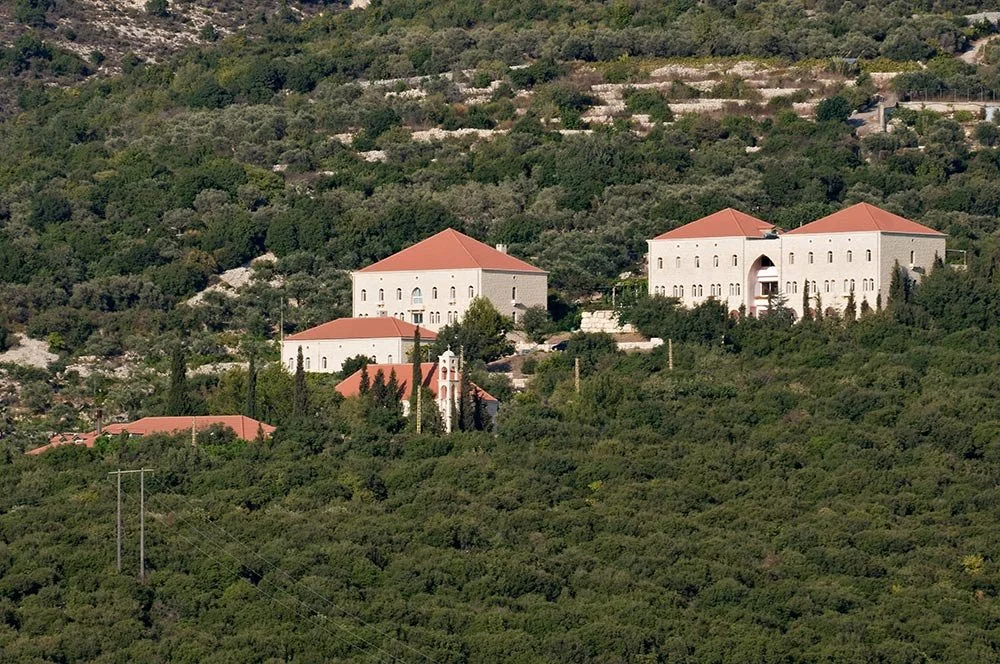
Aamchit, Eddé, Lehfed, Qartaba: each has its own topography, history, and uses.
Ancient churches can still be found there, sometimes built on even older sites. Stone dwellings adapted to relief and climate. Traces of occupation that sometimes reach back through several periods.
These villages are not extensions of the city. They have their own rhythm and structure.
But they share the same territorial anchoring and the same continuity of human occupation.
The territory as archive
The landscape around Byblos preserves traces that go beyond human history.
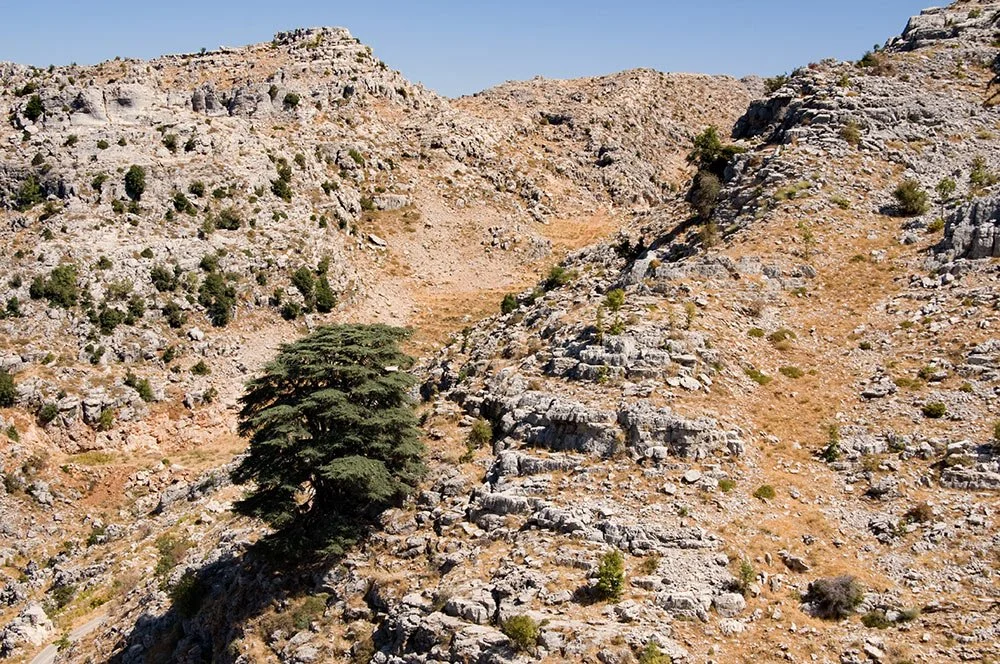
At Hjoula, fossils testify to a far older past stretching back millions of years.
At Jaj, cedars cling to rocky reliefs, marking another form of permanence. This landscape can also be explored from within through our 360° virtual tour of Jaj Cedars.
At Mebaaj, a cave extends beneath the surface, revealing ancient geological formations.
The territory becomes an archive on several levels: geological, natural, and human.
Byblos is only one point within this wider whole.
A territory in relation
Between sea and mountain, circulation continues.
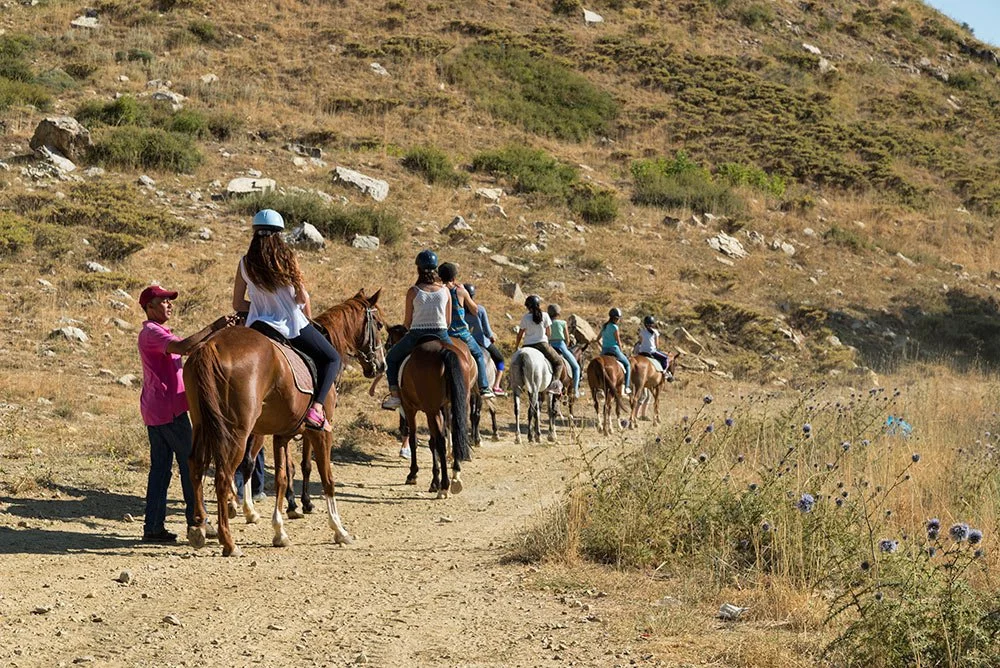
Paths connect the villages, cross the valleys, and follow the relief. Formerly trade routes or movement corridors, they now become itineraries and journeys.
The territory around Byblos remains a relational space: between town and countryside, between coast and mountain, between the past and present-day uses.
What is at stake here is not fixed.
It is a balance between continuity and transformation.
To place these mountain forests within the wider history of the territory, explore Byblos and the Cedar.