
Shouf cedars forest — Virtual Tour
In the southern part of Mount Lebanon, the cedars of the Shouf extend across a much larger territory than the groves of Jaj or Bsharri.
Created in 1996, the Shouf Cedar Nature Reserve includes the forests of Maasser el-Shouf, Barouk and Ain Zhalta–Bmohray. Since 2005, it has formed the core of the Shouf Biosphere Reserve, recognised by UNESCO.
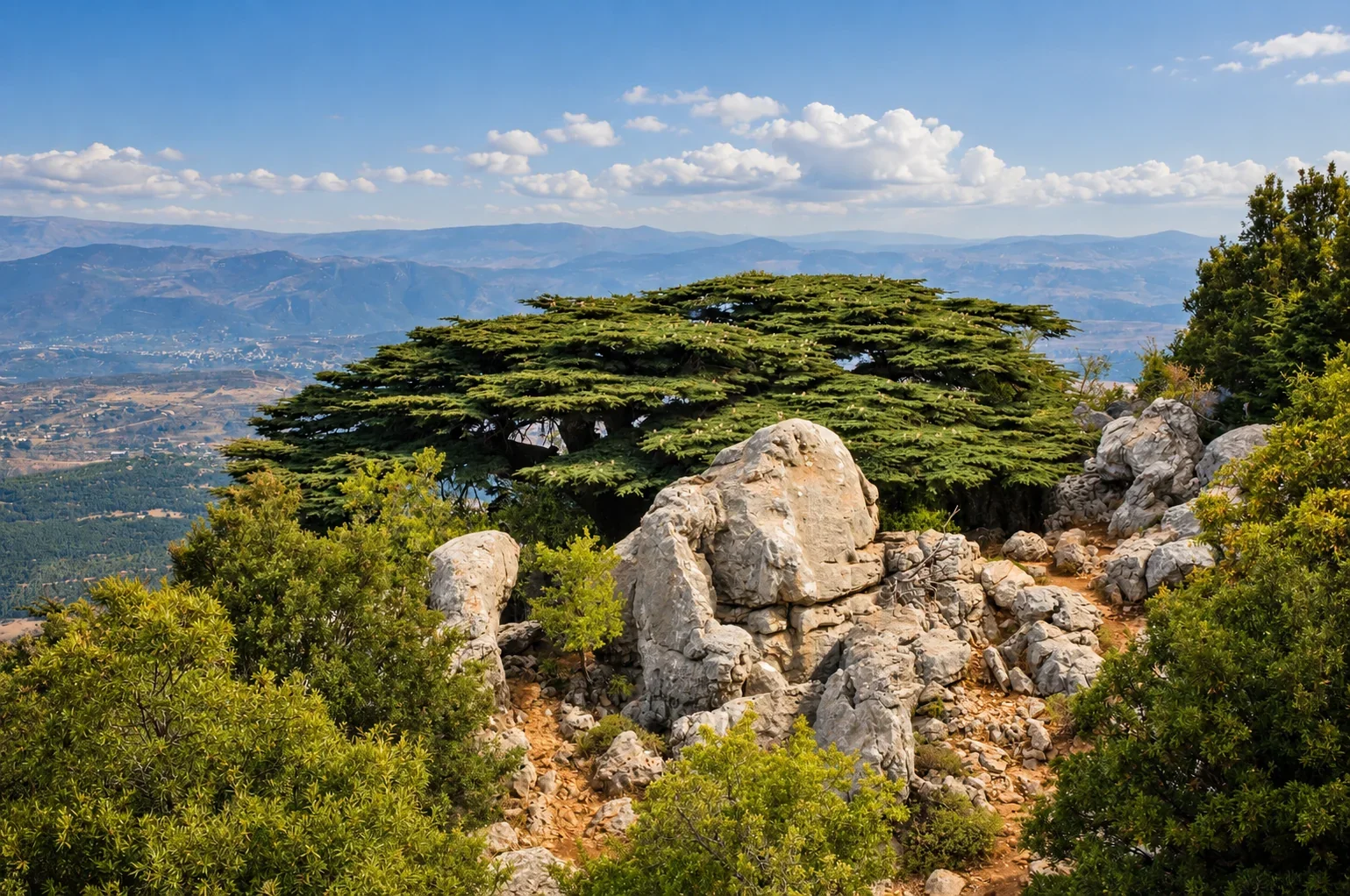
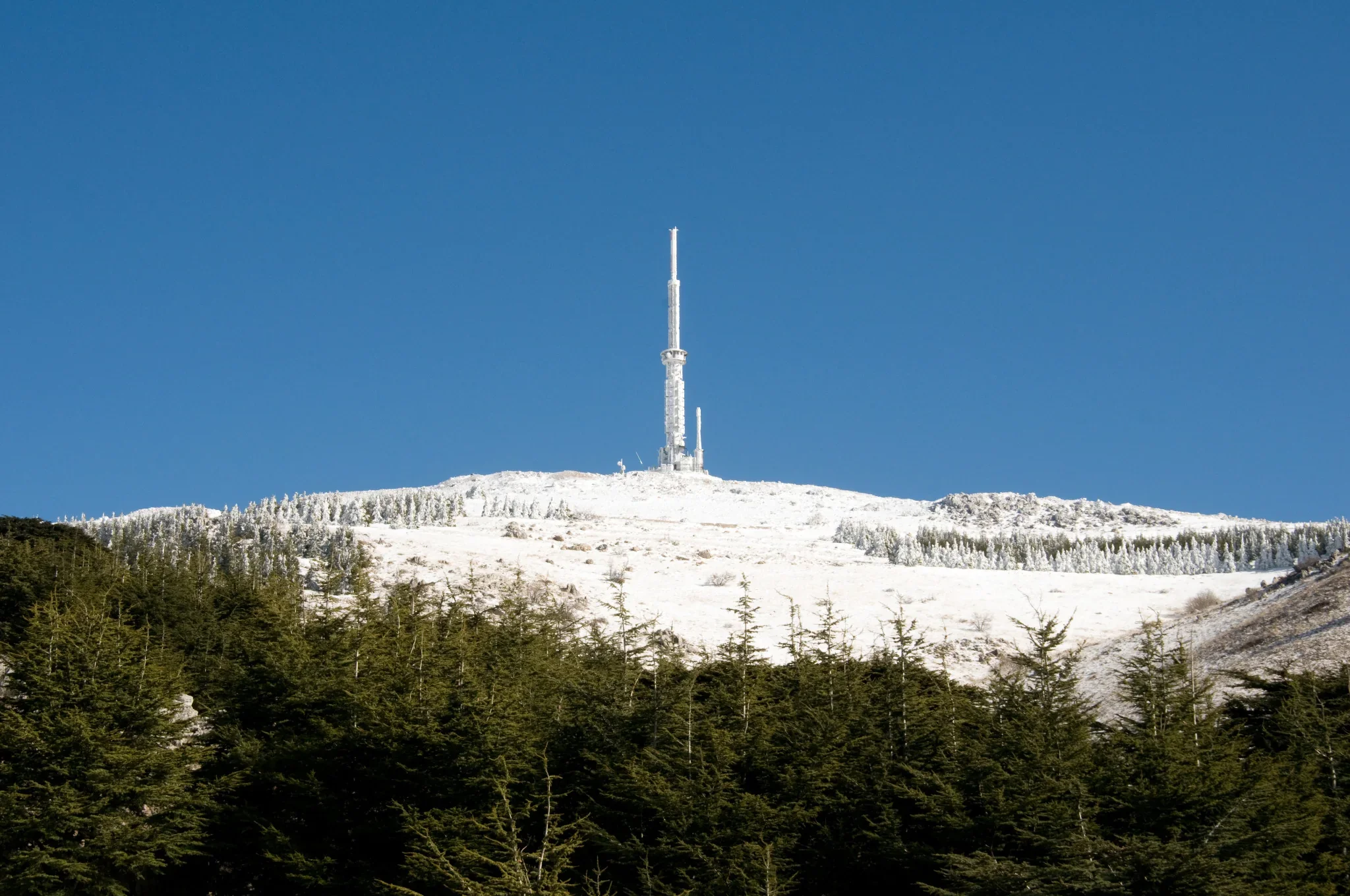
Here, cedar trees are not isolated from the surrounding landscape. They belong to a mosaic of forests, pastures, agricultural land, villages and rocky mountain terrain extending across the Barouk range.
Explorer la réserve de Chouf en 360°
The panorama takes you into one of Mount Lebanon’s major forest landscapes.
Cedars occupy the slopes alongside other forms of vegetation, within a territory where the forest continues far beyond the immediate field of view. The virtual visit conveys this sense of scale: here, the tree belongs to something larger — a mountain landscape still largely structured by its natural environments.
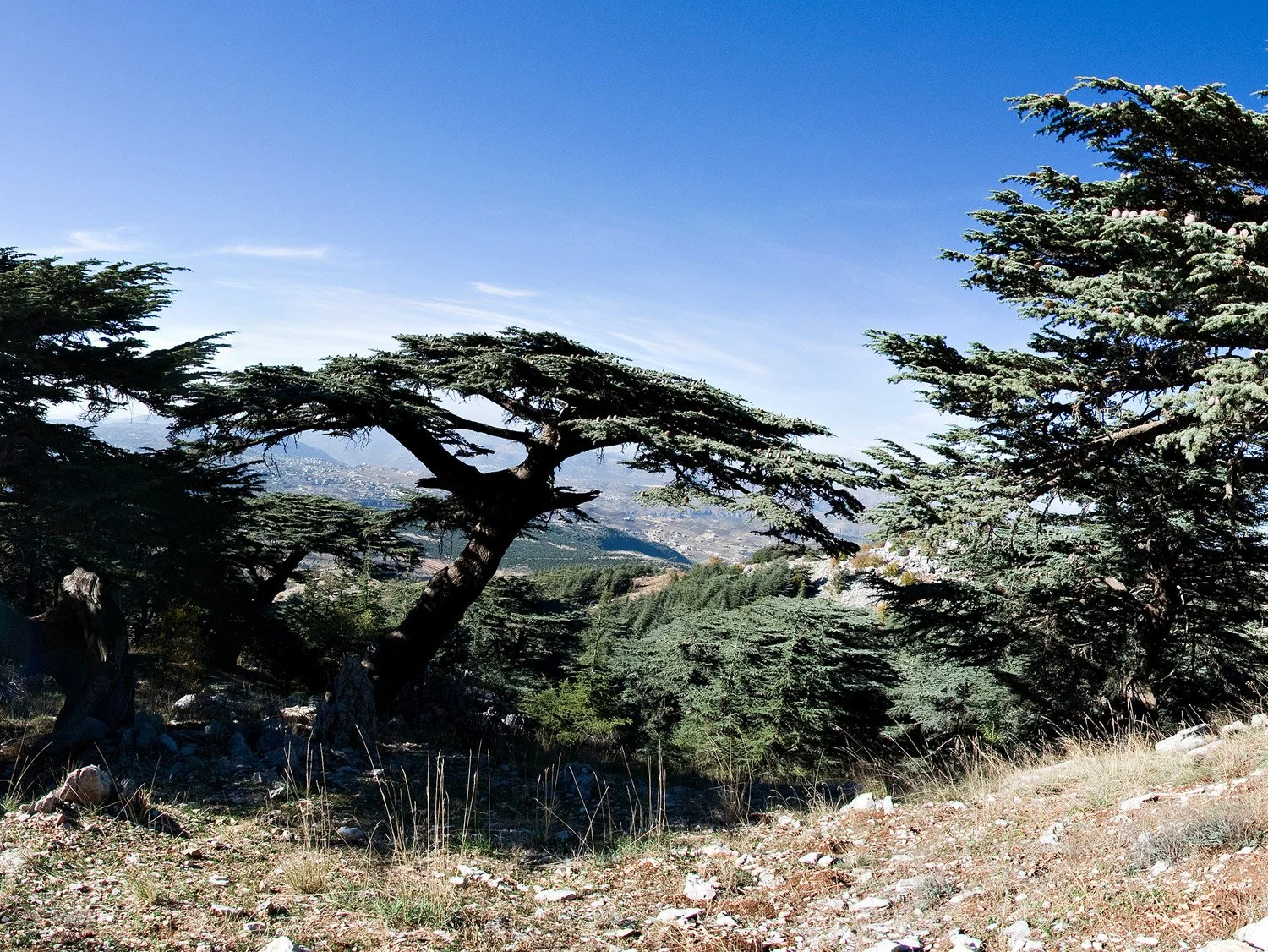
The Shouf, another scale
The Shouf allows us to approach the cedar at the scale of an entire territory.
The reserve’s three main cedar forests — Maasser el-Shouf, Barouk and Ain Zhalta–Bmohray — form part of a mountain landscape where oak forests, pine woods, high-altitude pastures, agricultural land and rocky outcrops coexist. The reserve describes this landscape as a mosaic shaped both by natural processes and by human activity.
In At the Heart of Our Forests, the Shouf was already presented as a landscape composed of several major forest sectors around Maasser el-Shouf, Barouk and Ain Zhalta. This territorial dimension already distinguished it from the other cedar forests documented in the book.
Today, this scale remains one of the defining characteristics of the Shouf.
The Biosphere Reserve covers approximately 500 km² and includes villages and agricultural areas beyond the nature reserve itself. The cedar therefore belongs to an inhabited, travelled and long-used territory rather than to an isolated forest sanctuary.
Populations of Cedrus libani are found mainly on the steeper and less accessible slopes. The reserve also reports natural regeneration in several areas where grazing and other human pressures have been reduced.
Within the wider story of Byblos and the cedar, however, the Shouf must be approached with caution.
Unlike Jaj, the sources gathered so far do not establish a direct connection between these specific forests and the timber cargoes that once passed through the port of Byblos.
The Shouf offers something different: a sense of what a large forest territory could represent at the scale of Mount Lebanon — a landscape in which cedar trees coexisted with other species, pastures, villages and the many human uses of the mountains.
It therefore brings the journey to a close by widening the perspective: from the cedar as a tree, to the cedar as a forest, and finally to the cedar as part of an entire landscape.
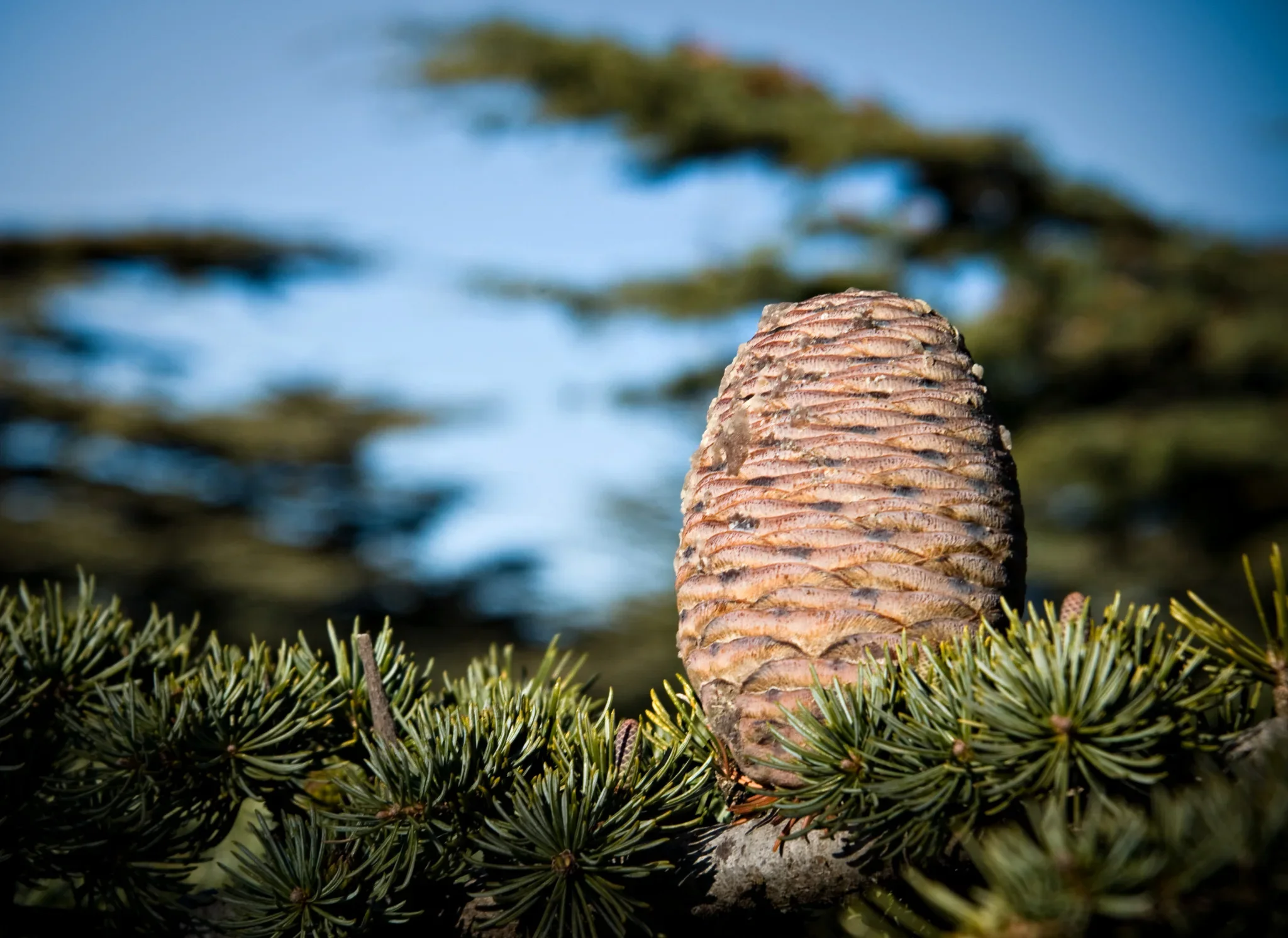
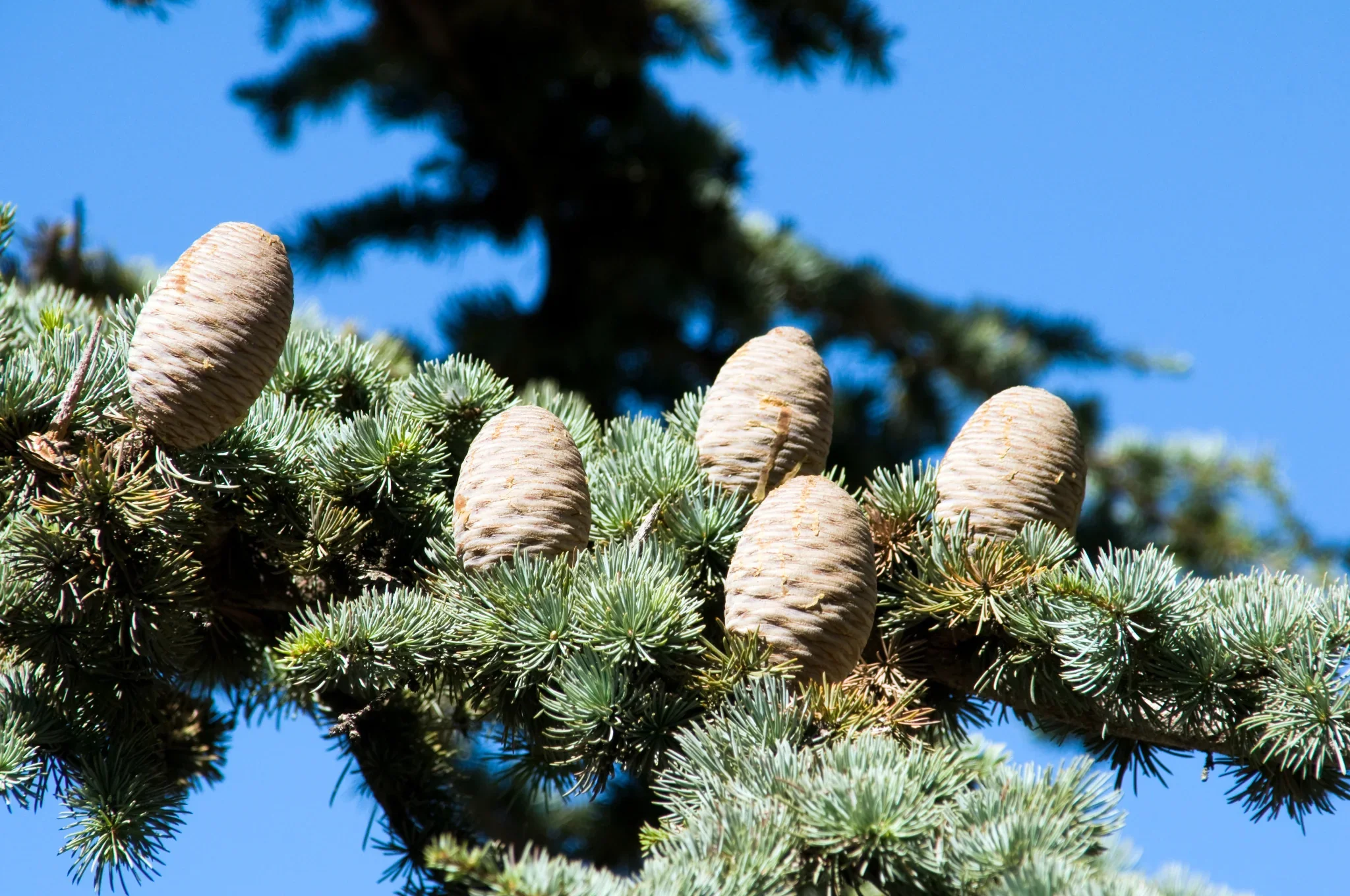
Photo gallery — Shouf cedars forest
Sources and references
Shouf Biosphere Reserve — official website: organisation of the reserve, its geography, and the forests of Maasser el-Shouf, Barouk and Ain Zhalta–Bmohray.
Shouf Biosphere Reserve — National Standing: establishment of the nature reserve in 1996 and recognition of the Biosphere Reserve in 2005.
Shouf Biosphere Reserve — Landscape: description of the landscape mosaic combining forests, agriculture, pastures and rocky areas.
Shouf Biosphere Reserve — Cedrus libani: distribution of cedar populations and current patterns of natural regeneration.
Melkan Bassil — At the Heart of Our Forests, “The Cedars of the Chouf”: earlier photographic and editorial work on the different cedar forests of the massif. AU COEUR DE NOS FORETS - TEXTES…
Visit Byblos aims to provide documented content based on identified sources. Some information may nevertheless evolve as research advances and new discoveries are made. Documented corrections or additional information are welcome.
Explore Lebanon’s other cedar forests and discover, step by step, the landscapes in which the cedar has endured through the centuries. Jaj, Tannourine, Bsharri and the Shouf: each panorama reveals a different relationship between the tree, the rock and the mountains.
Move along the line to discover another virtual tour.