Byblos, a Crossroads of Writing
Along the Levantine coast, facing the Mediterranean, one city has brought together people, languages and exchanges for thousands of years.
Byblos is more than an ancient harbour. It is a place of transition.
Between Egypt and the Near East, between maritime routes and inland territories, goods travelled through the city—but so did symbols, writing systems and ways of recording knowledge.
Here, writing did not emerge in isolation. It evolved through contact.
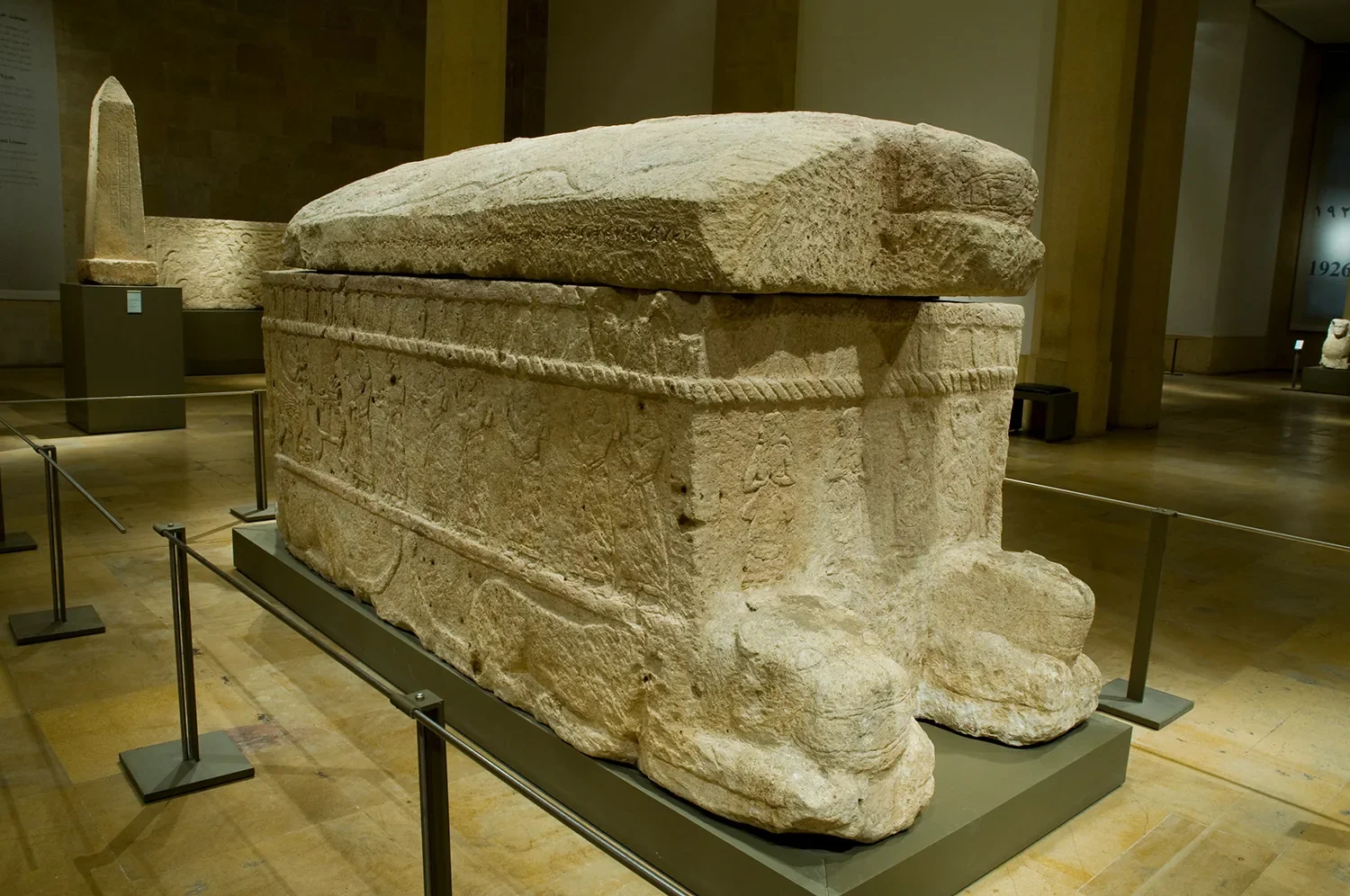
The Sarcophagus of Ahiram is one of the most significant surviving testimonies to the earliest alphabetic inscriptions associated with Byblos.
Photo : Melkan Bassil - All rights reserved
A Harbour Open to Many Worlds
From the third millennium BC onwards, Byblos became part of extensive trade networks.
Lebanese timber—especially cedar—was exported to Egypt. In return came precious objects, textiles and papyrus. Among these goods, papyrus held a unique place. Lightweight and easy to transport, it encouraged the wider circulation of written texts.
The city's very name reflects this history. The Greeks used the word byblos to refer to papyrus, and later to books themselves.
Writing Systems in Contact
Before the Phoenician alphabet emerged, several writing systems coexisted across the region: Egyptian hieroglyphs, Mesopotamian cuneiform, and other local scripts that remain only partially understood.
These systems were not interchangeable. Each required its own methods, conventions and years of learning.
In Byblos, they came into contact.
They were used for diplomacy, trade and religion, existing side by side long before any single alphabet became dominant.
Towards Simplicity
Within this environment of constant exchange, a practical challenge emerged.
Writing needed to become faster, more flexible and easier to learn.
The Phoenician alphabet answered that need.
By reducing writing to a limited number of signs, it offered a more adaptable system. It was not a complete break with earlier traditions, but rather an evolution shaped by experience.
The inscriptions discovered at Byblos—particularly those linked to royal authority and funerary memory—bear witness to this transformation.
Writing gradually became part of everyday civic life.
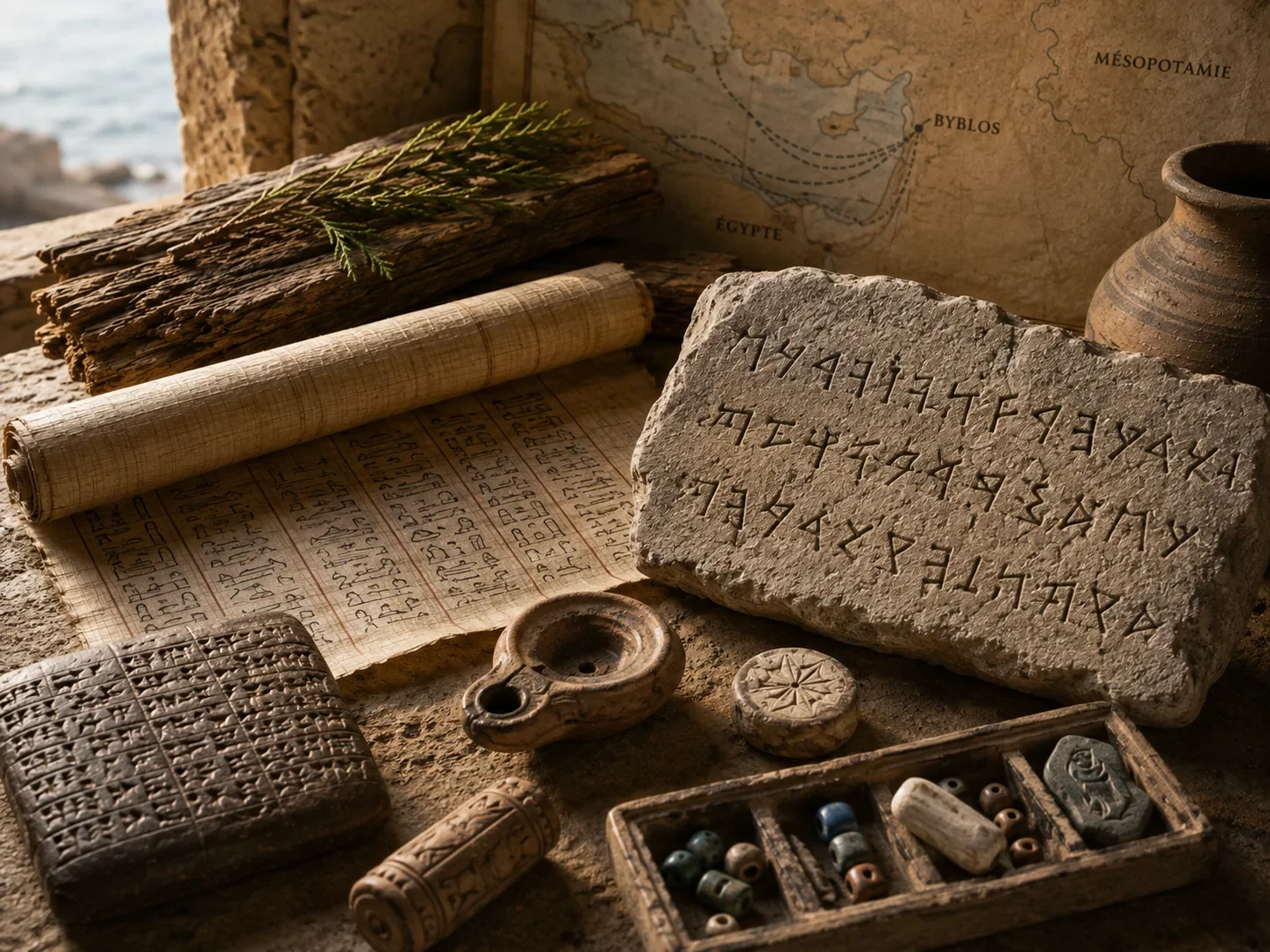
Illustration generated using AI.
A Point of Diffusion
Phoenician merchants carried more than goods across the Mediterranean.
They also carried ideas and practices.
As they sailed from port to port, they contributed to the spread of a writing system that was simpler and easier to adopt.
That system was then borrowed, adapted and transformed.
Its forms changed over time, but its underlying principle travelled far beyond its place of origin.
Byblos and the History of Writing
Byblos was not the only place involved in the emergence of the Phoenician alphabet.
Yet the city occupies a distinctive place in its history.
Archaeological discoveries made on the site, particularly its early inscriptions, make Byblos a key reference for understanding how writing develops within a landscape, within everyday practices and across generations.
A Place of Transition
What defines Byblos is not simply its age.
It is its ability to connect.
To connect places. To connect cultures. To connect writing systems. Through this continuous movement, something changed.
Writing became simpler, more portable and easier to transmit.
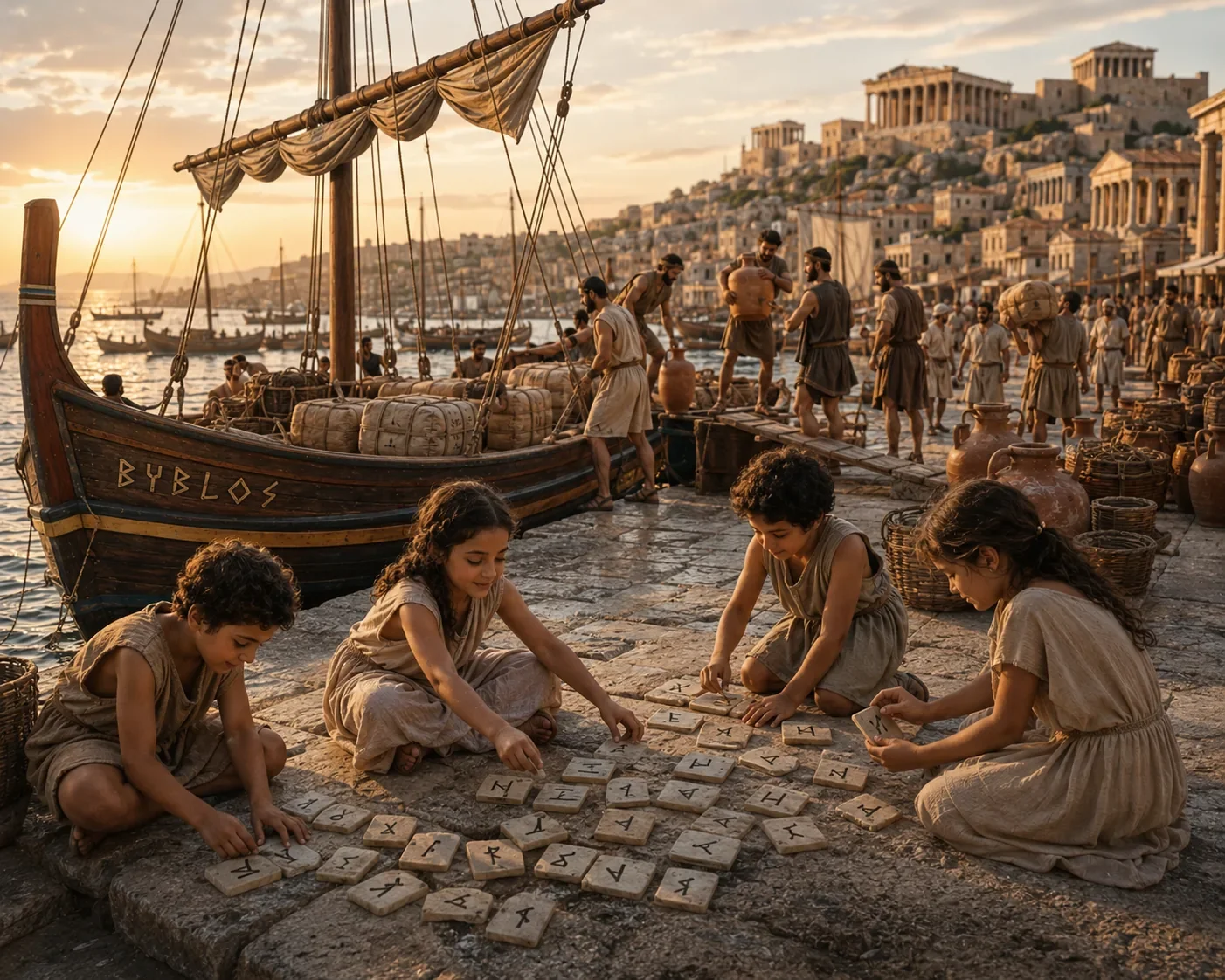
Illustration generated using AI.
In Byblos, writing cannot be reduced to a single moment of invention.
It belongs to a network of contacts, exchanges and transformations.
What the city reveals is not an isolated discovery, but a process.
A process through which complex systems evolved, became simpler, and ultimately spread across the Mediterranean and beyond.
This article is also available in French.
→ Lire la version française
Add Visit Byblos to your preferred sources to discover more content about Byblos on Google.