
The Colossus of Byblos and the Sarcophagus of Ahiram — 360° Virtual Tour in
Inside the National Museum of Beirut, the eye is first drawn toward a monumental silhouette.
A stone colossus stands silently in the main hall of the ground floor.
Nearby rests the sarcophagus of King Ahiram, discovered in the royal necropolis of Byblos.
Between these two objects, entire centuries seem to converge.
Egyptian influence, Phoenician kingdoms, the earliest forms of the alphabet — all remain present within this quiet museum space shaped by light and stone.
From Byblos to Beirut, these artifacts have crossed the history of Lebanon before becoming some of the country’s most important archaeological witnesses.
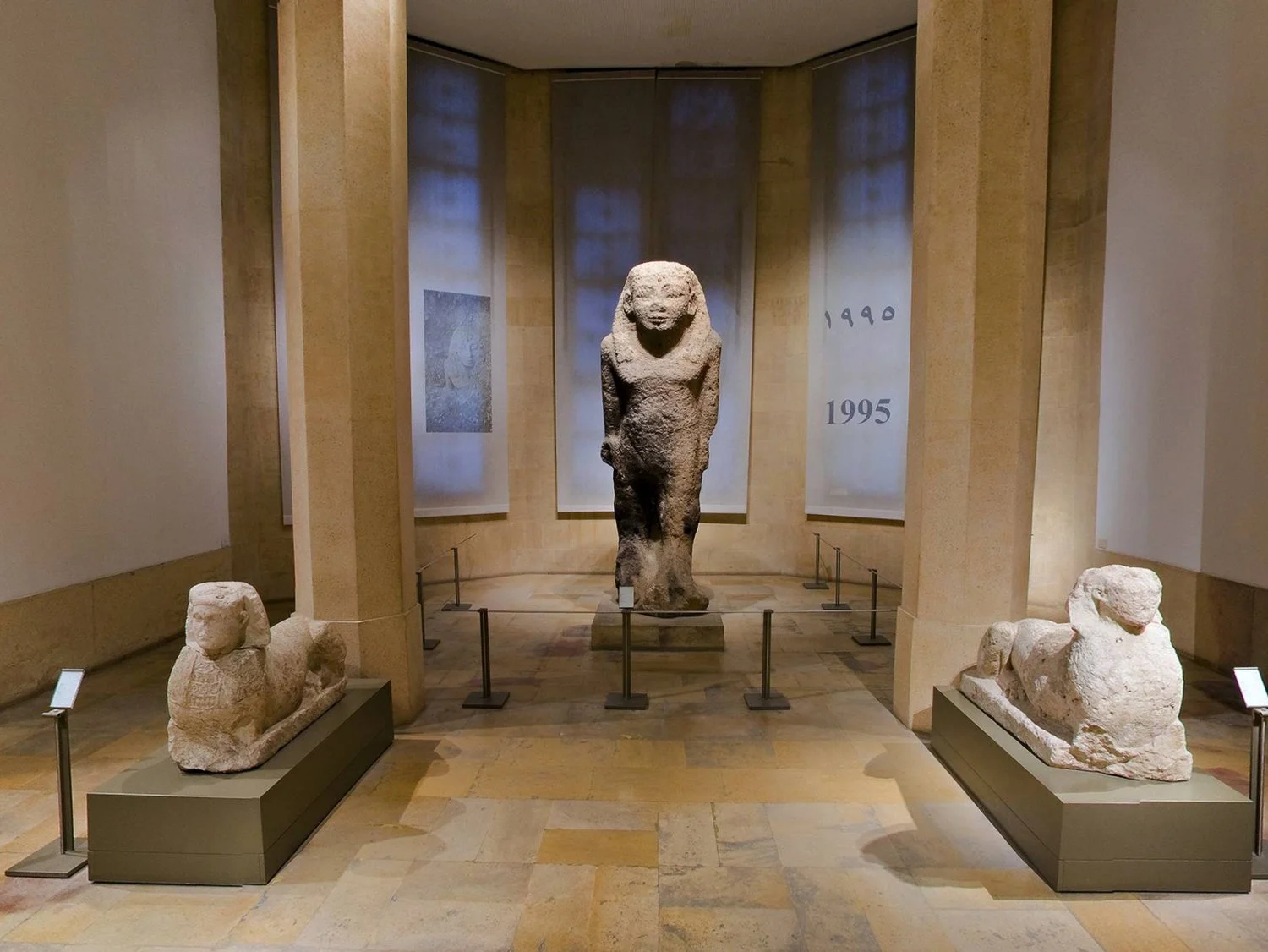
The Colossus of Byblos and the Sarcophagus of Ahiram
The Colossus of Byblos was discovered during the early archaeological campaigns led by Pierre Montet in the 1920s on the ancient site of Byblos. The monumental stone statue, strongly influenced by Egyptian royal sculpture, reflects the close relationship maintained between the Phoenician city and Ancient Egypt during the Bronze Age. Trade exchanges between the two regions deeply shaped the artistic, religious and political imagery of Byblos.
Nearby stands the sarcophagus of King Ahiram, discovered in 1923 within the royal necropolis of Byblos. Dating from around the 10th century BCE, it remains one of the major masterpieces of Levantine archaeology. Its inscription is considered among the oldest known examples of a fully developed Phoenician alphabet — the writing system that would later influence Greek and Latin alphabets still used today.
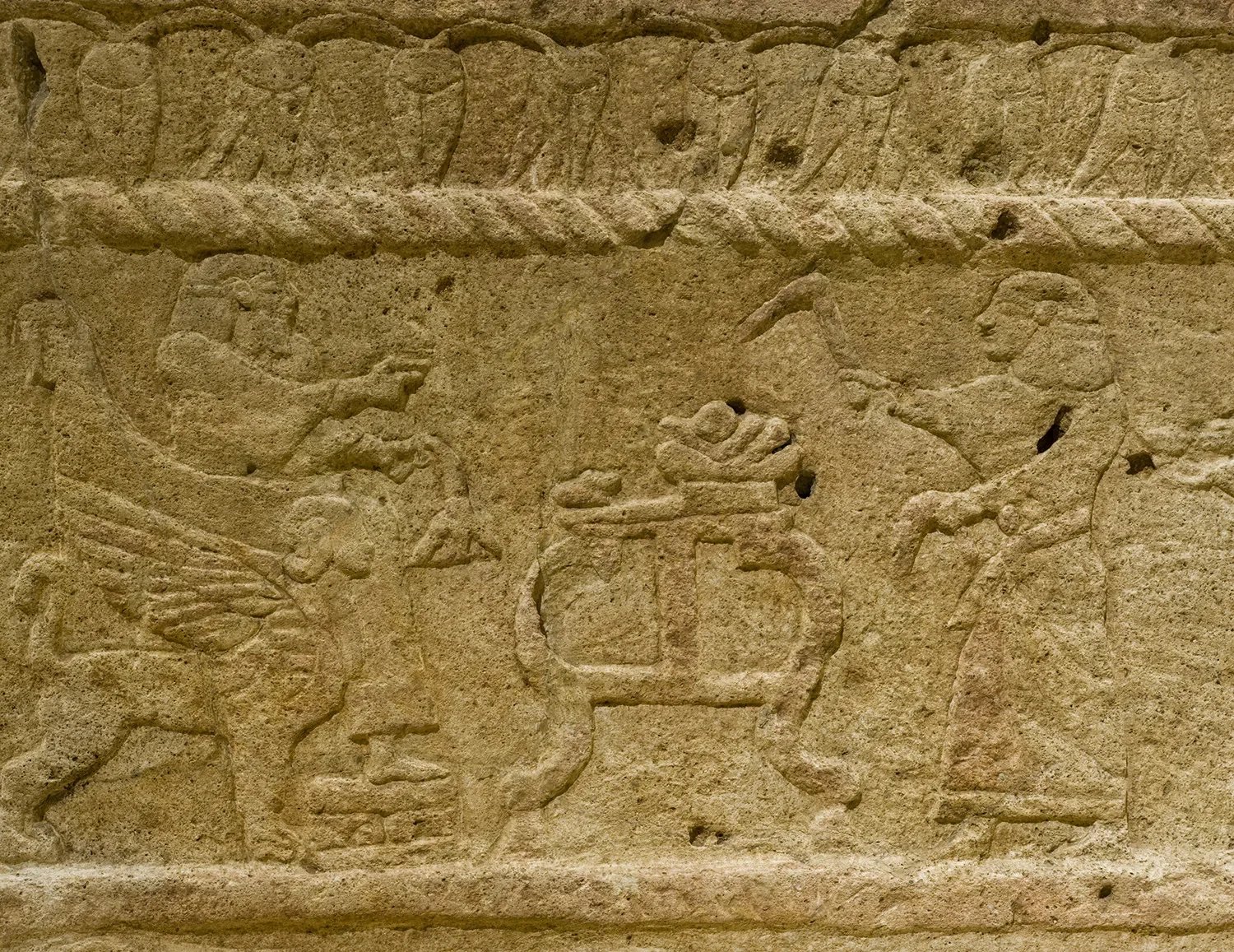
The carved reliefs surrounding the sarcophagus depict funeral processions and scenes of royal mourning. The monument brings together dynastic power, funerary memory and the transmission of writing within a single sculpted object.
The National Museum of Beirut, inaugurated in 1942, now preserves Lebanon’s principal archaeological collections. During the Lebanese Civil War, several masterpieces were protected inside concrete structures to prevent their destruction. Today, the museum remains one of the country’s most important institutions dedicated to the preservation of Levantine heritage.
Explore the Colossus of Byblos and the Tomb of Ahiram in 360°
To one side stands the colossus discovered during the first French excavations in Byblos. Nearby, the sarcophagus of King Ahiram occupies the center of the gate.
Photo Gallery — The Roman Colonnade and the remains of the ancient center
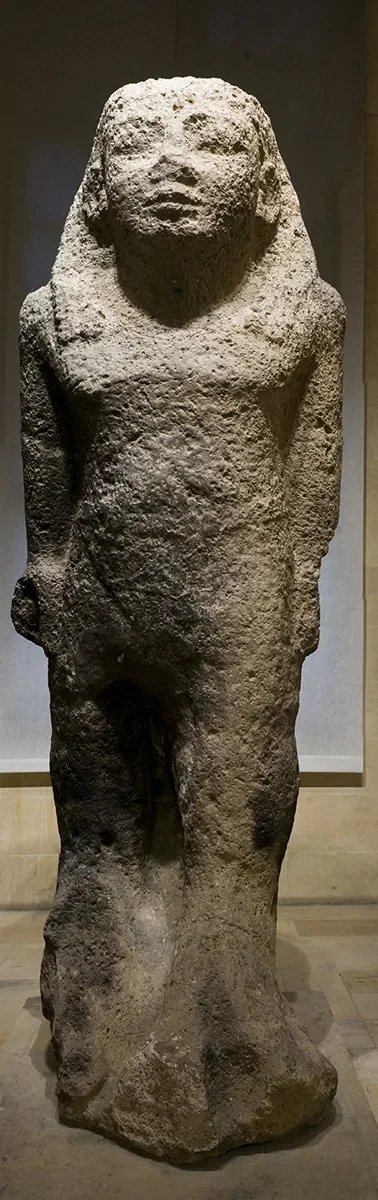
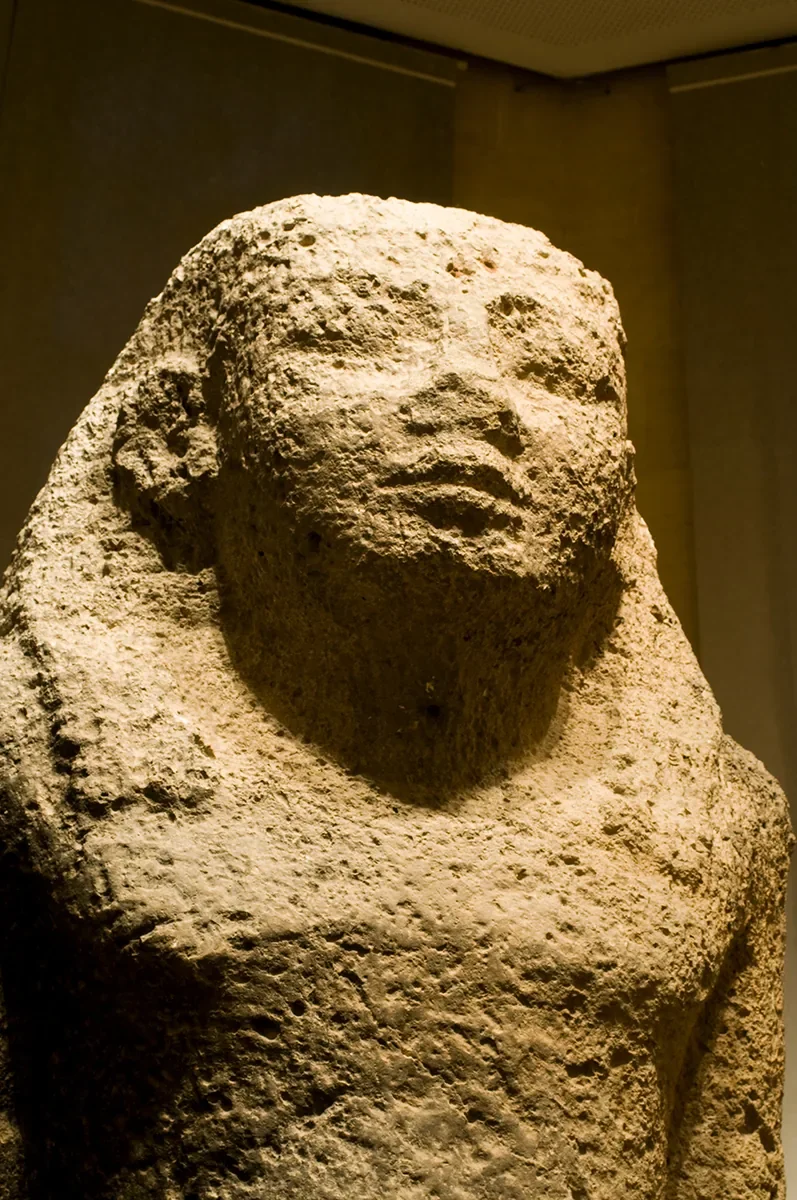
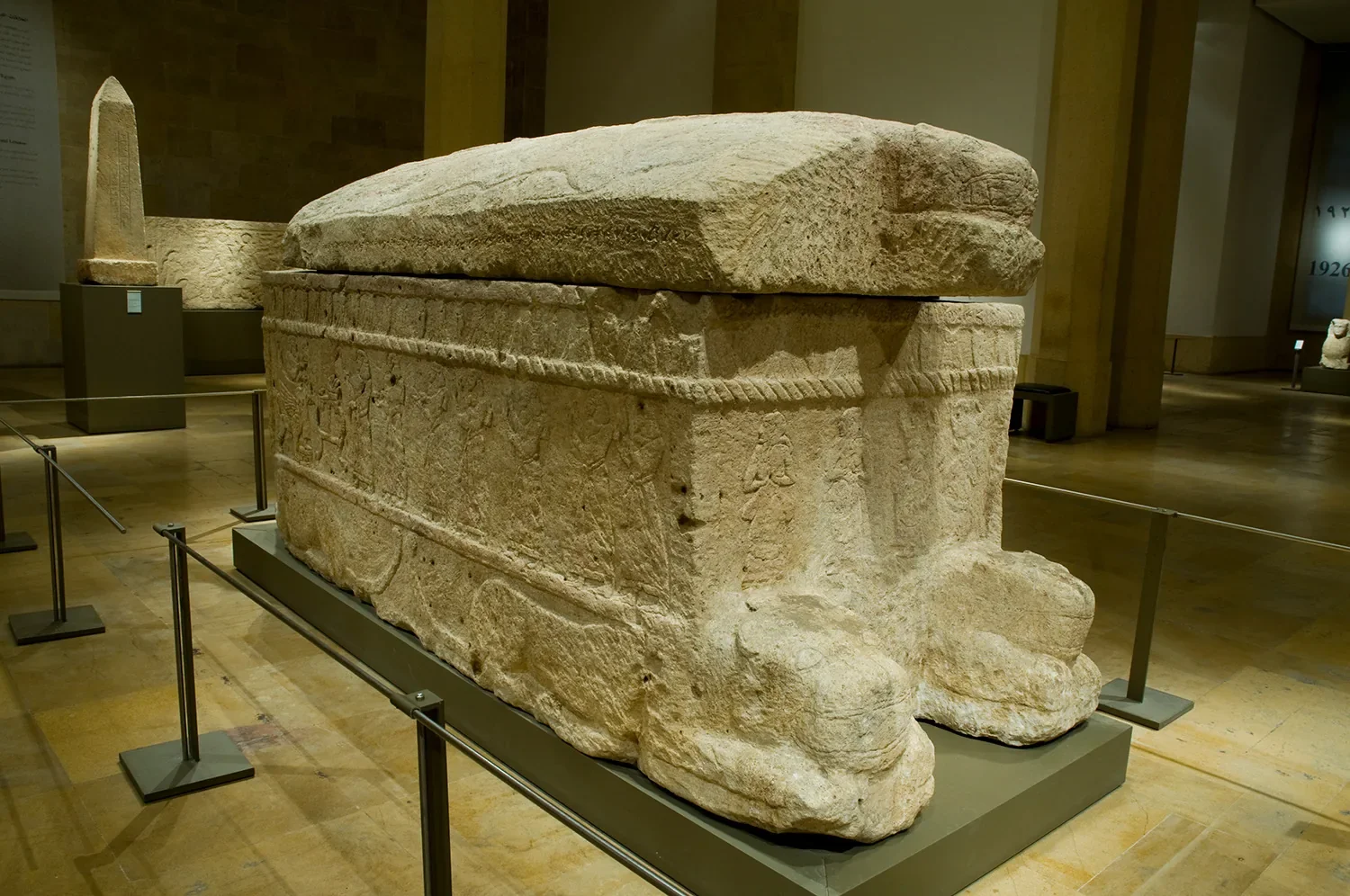
Explore the collections of Byblos at the National Museum of Beirut through two immersive 360° virtual tours. From the sarcophagus of King Ahiram to the Phoenician figurines of the Temple of the Obelisks, each panorama reveals another dimension of Byblos’ archaeological legacy — between royal power, ancient rituals and the origins of the alphabet..
Walk along the line to discover a new virtual tour.