
The Cedars of Jaj — Virtual Tour
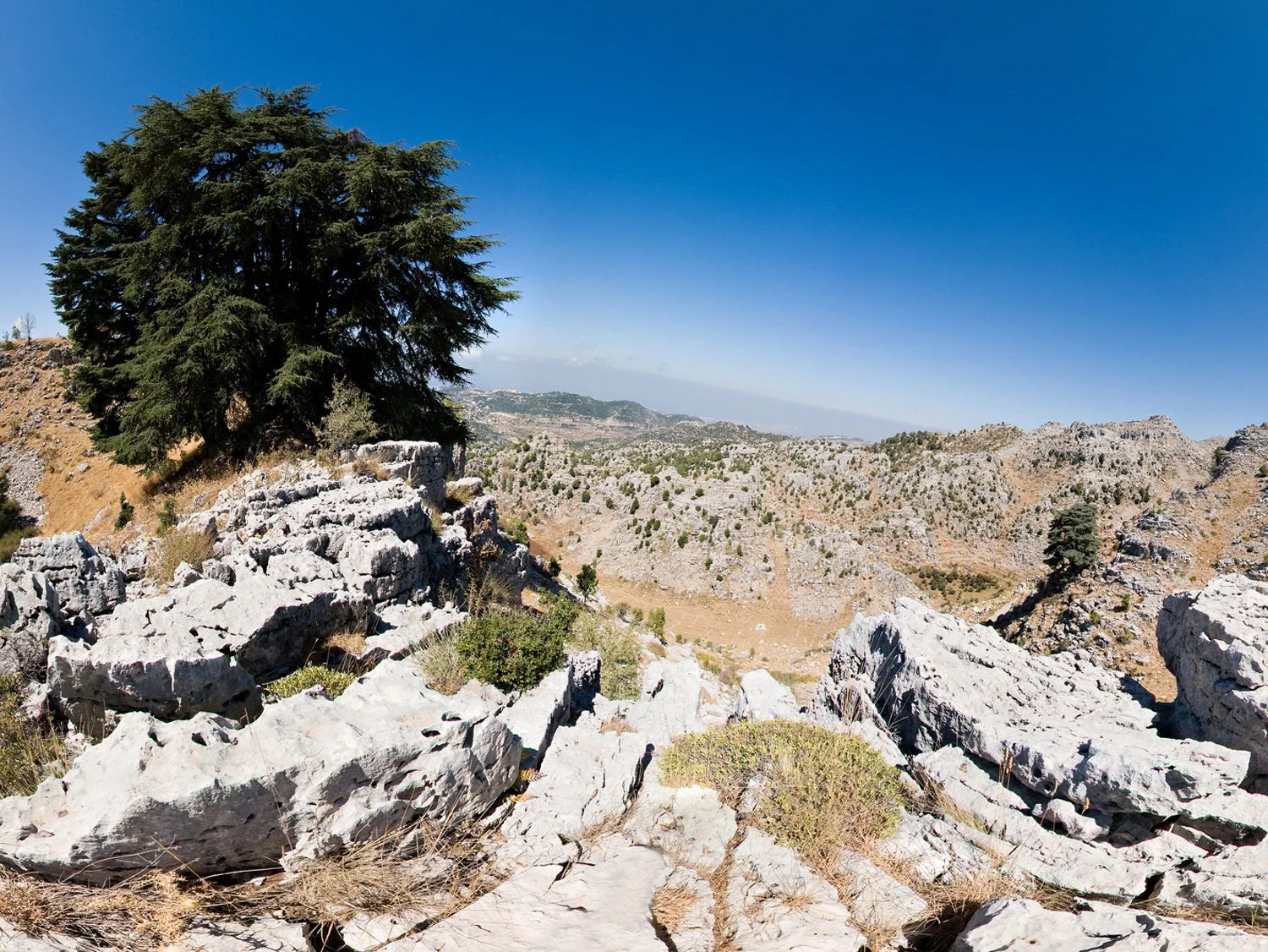
High in the Jbeil District, the Cedars of Jaj emerge from a landscape dominated by rock.
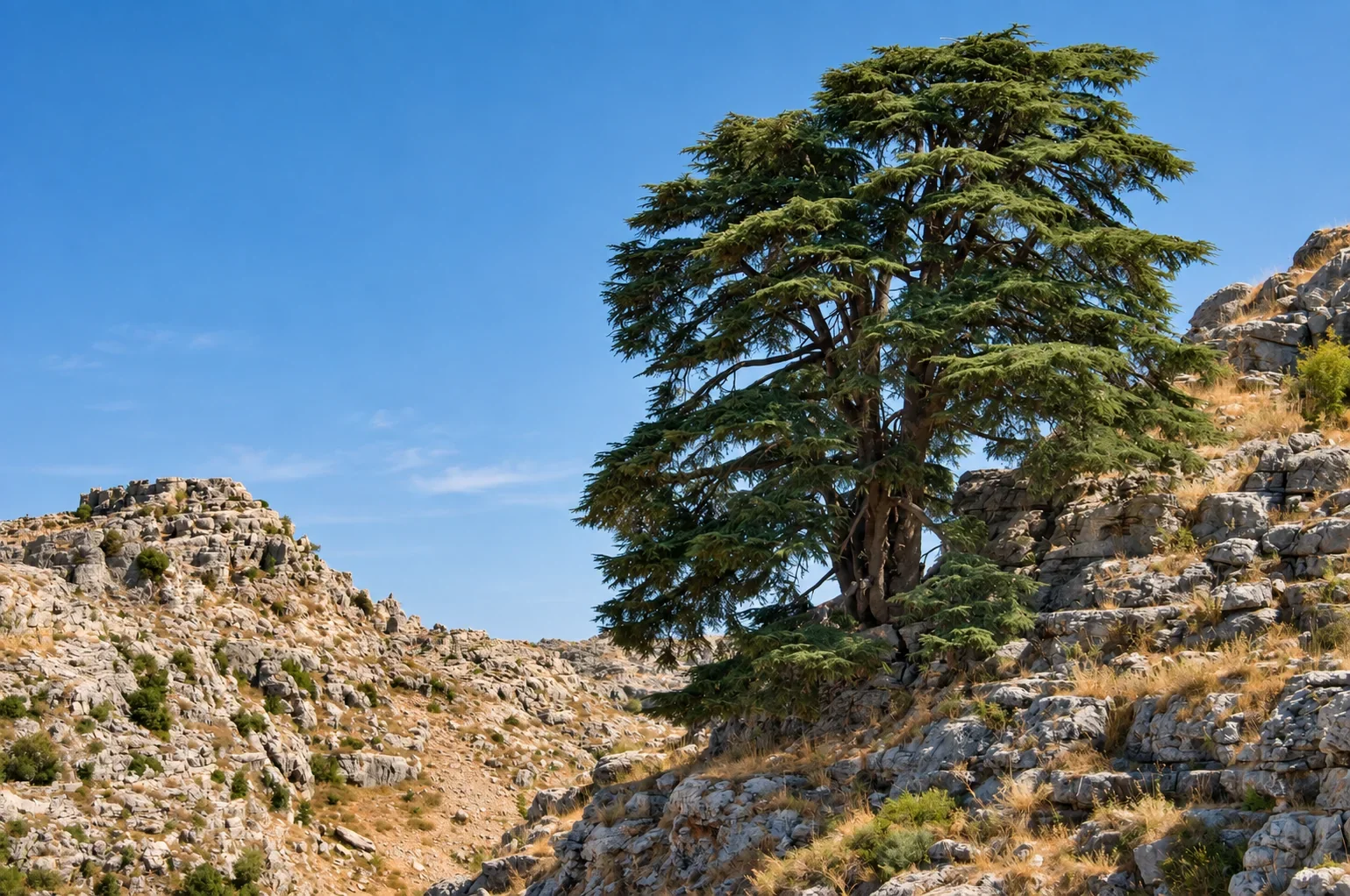
Here, the trees do not form a vast continuous forest. They rise from a deeply sculpted limestone terrain, sometimes standing alone on rocky outcrops, in a setting very different from Bsharri, Tannourine or the Shouf.
Created in 2014, the Jaj Cedars Nature Reserve now protects this distinctive landscape and several dozen ancient cedar trees within an area marked by highly developed karst formations.
Explore the cedars of Jaj in 360°
The panorama takes you into the heart of this mineral landscape, where cedar trees still cling to the rocky slopes of Jaj.
The virtual visit reveals the remarkable relationship between tree and stone: an open, fragmented landscape where each cedar seems to occupy its own piece of mountain.
Jaj, the mountain behind Byblos
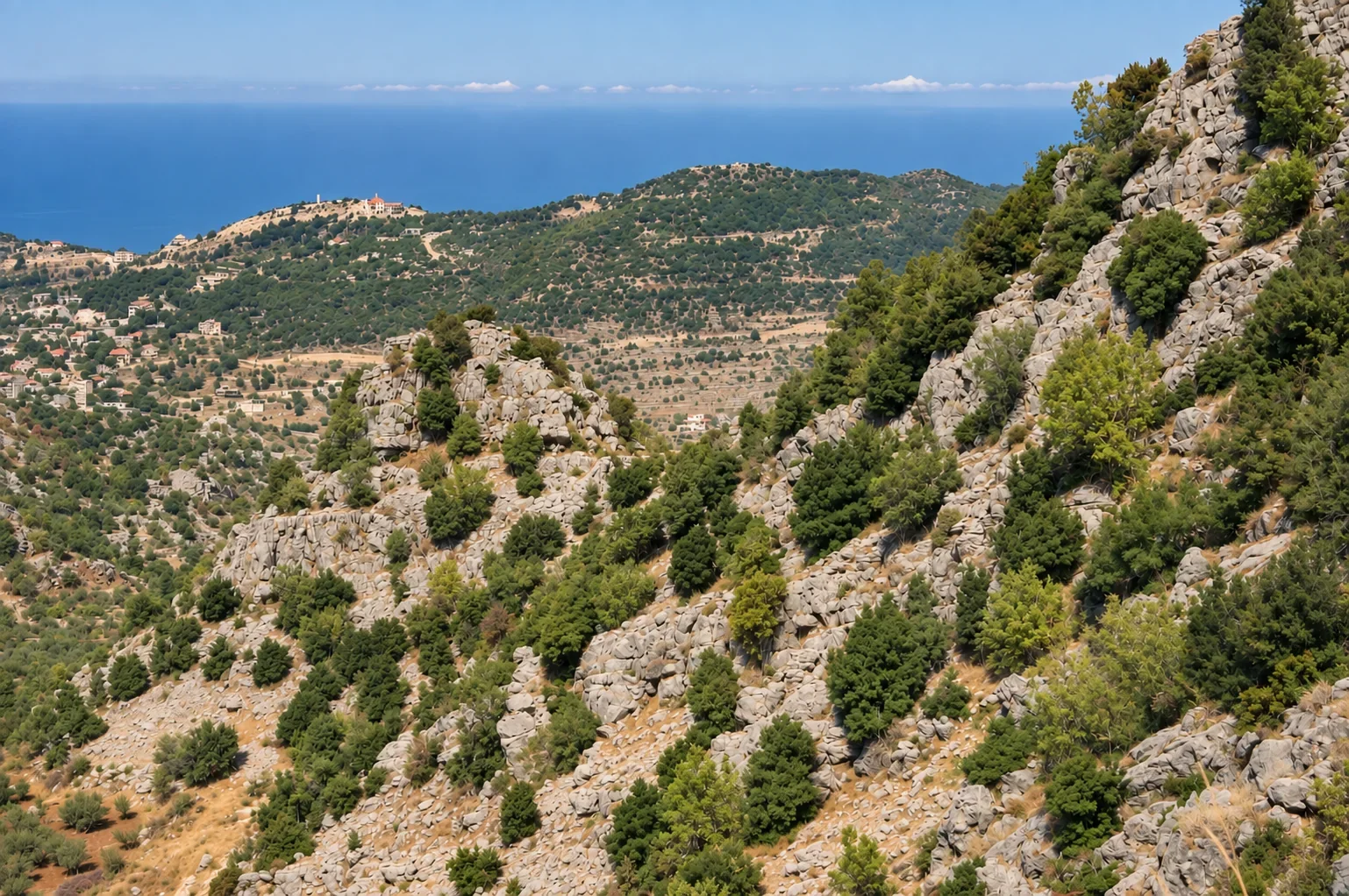
Jaj belongs directly to the historic hinterland of Byblos.
A UNESCO publication devoted to Byblos and its surrounding territory explicitly refers to cedar timber being transported from the forests of Jaj to the port of Byblos, before being exported towards Palestine or Egypt.
This connection gives another depth to the landscape we see today.
The surviving trees should not be regarded as an untouched image of the ancient forest. Landscapes have changed, forests have become fragmented and the ways in which the mountains are used have evolved.
Yet Jaj still helps us understand an essential aspect of Byblos: the city did not only look towards the sea. Its history also depended on the mountains, their resources and the routes connecting the interior to the coast.
At Jaj, this relationship between territory, material and movement can still be read in the landscape.
Photo Gallery — The cedars of Jaj
Sources and references
UNESCO World Heritage Centre — Partnerships for World Heritage Cities: Culture as a Vector for Sustainable Urban Development, World Heritage Papers 9.
The publication refers to the transport of cedar timber from the mountains of Jaj to the port of Byblos, before its export towards Palestine or Egypt.
Ghanem, Diala & Doumit, Jean — “Karst libanais et géomatique : application à la réserve naturelle de Arz Jaj (Byblos-Liban)”, Karstologia, no. 78, 2021.
Study of the natural environment of the reserve, created in 2014, its ancient cedar trees and its karst landscape.
Photographs by Melkan Bassil
Editorial note
Visit Byblos aims to provide documented content based on identified sources. Some information may nevertheless evolve as research advances and new discoveries are made. Documented corrections or additional information are welcome.
Explore Lebanon’s other cedar forests and discover, step by step, the landscapes in which the cedar has endured through the centuries. Jaj, Tannourine, Bsharri and the Shouf: each panorama reveals a different relationship between the tree, the rock and the mountains.
Move along the line to discover another virtual tour.