
The cedars of Bsharri — Virtual Tour
At nearly 2,000 metres above sea level, on the slopes of Mount Makmel, a small group of cedars still occupies a landscape once covered by much larger forests.
The Forest of the Cedars of God — Horsh Arz el-Rab, east of Bsharri, is today one of the most emblematic remnants of Lebanon’s ancient cedar forests. Together with the Qadisha Valley, it has been inscribed on the UNESCO World Heritage List since 1998.
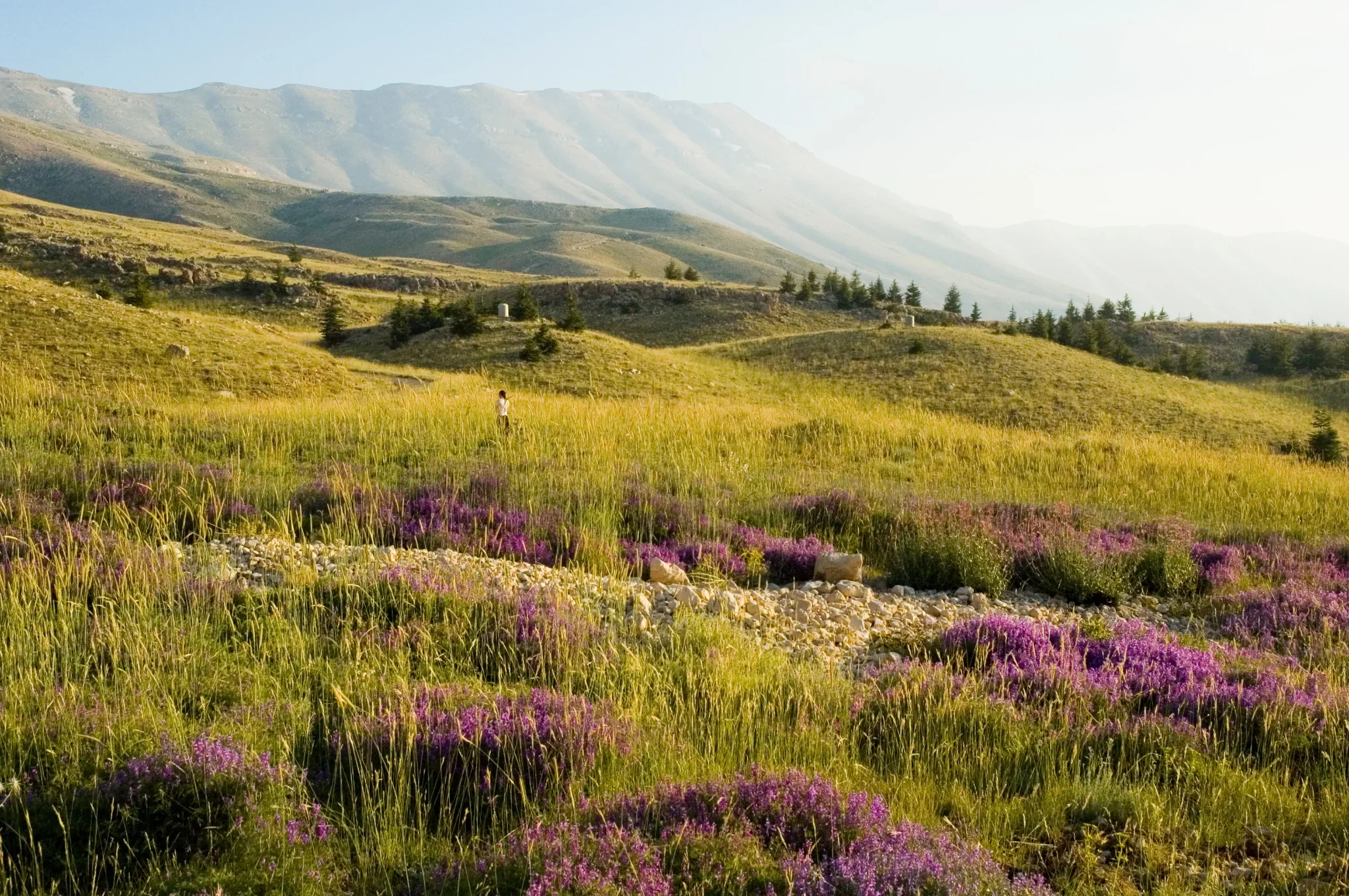
Here, the landscape speaks less of abundance than of survival: ancient trees, bare mountains around them, and the memory of a forest whose extent gradually diminished over the centuries.
Explore the cedars of Bsharri in 360°
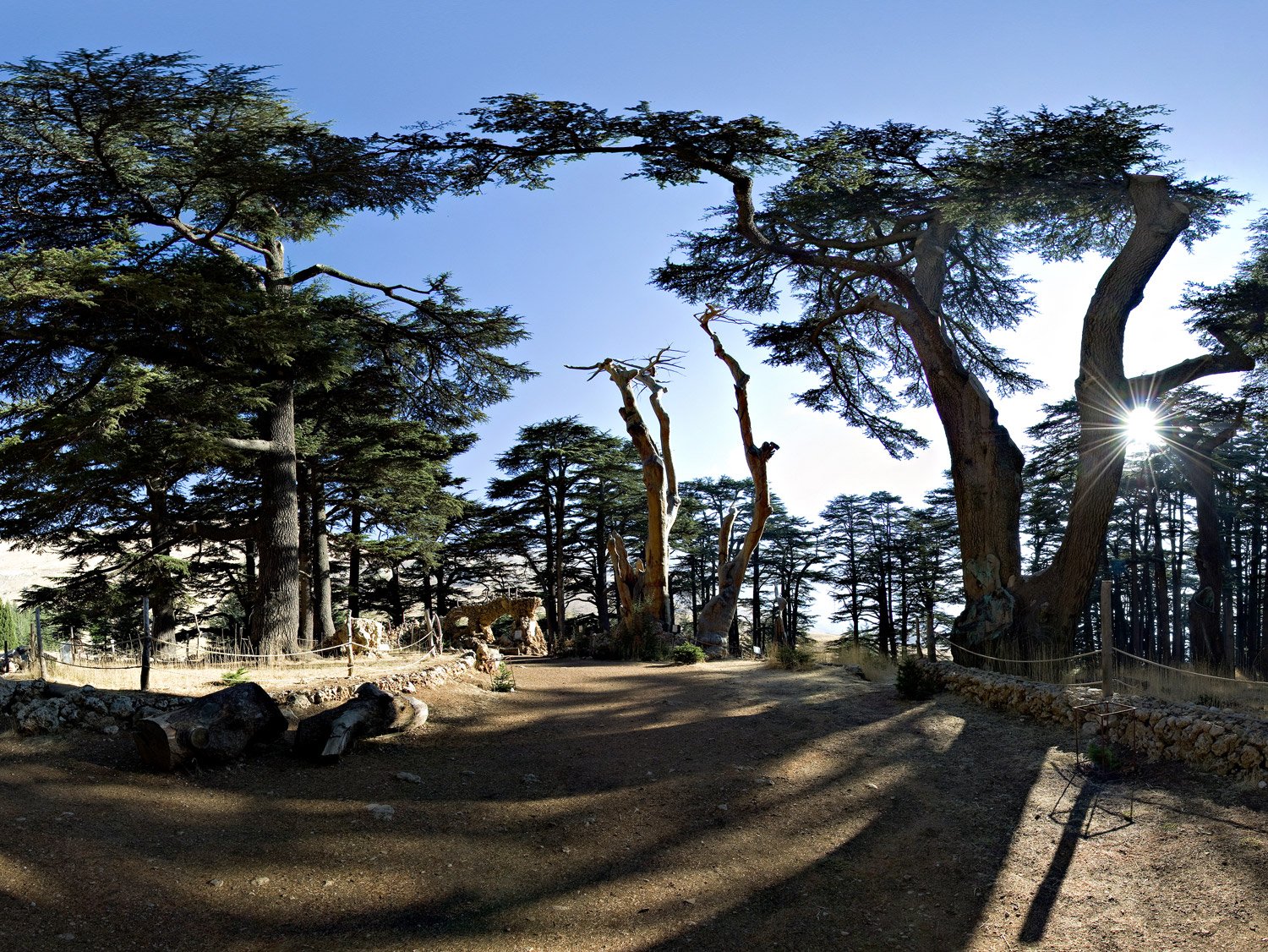
The panorama takes you inside a forest that has become almost an enclave within the mountain landscape.
The cedars rise beneath the high summits of Mount Lebanon, close to the deep relief of the Qadisha Valley. The virtual visit reveals the contrast between the monumental presence of the trees and the fragility of the territory surrounding them.
Bsharri, a forest of survivors
UNESCO describes the Forest of the Cedars of God as one of the last remnants of Lebanon’s ancient cedar forests. The trees that remain today are survivors of a forest long regarded as sacred, whose timber was highly valued in antiquity.
This long history does not mean that the trees visible today can be directly associated with the timber cargoes that once left the port of Byblos. Ancient and archaeological sources clearly document the exploitation of Lebanon’s cedar forests and the circulation of their timber across the eastern Mediterranean, but they do not always allow the precise mountain forests of origin to be identified.
Bsharri therefore belongs to a broader story: that of a forest landscape that once extended much further across the mountains of Lebanon.
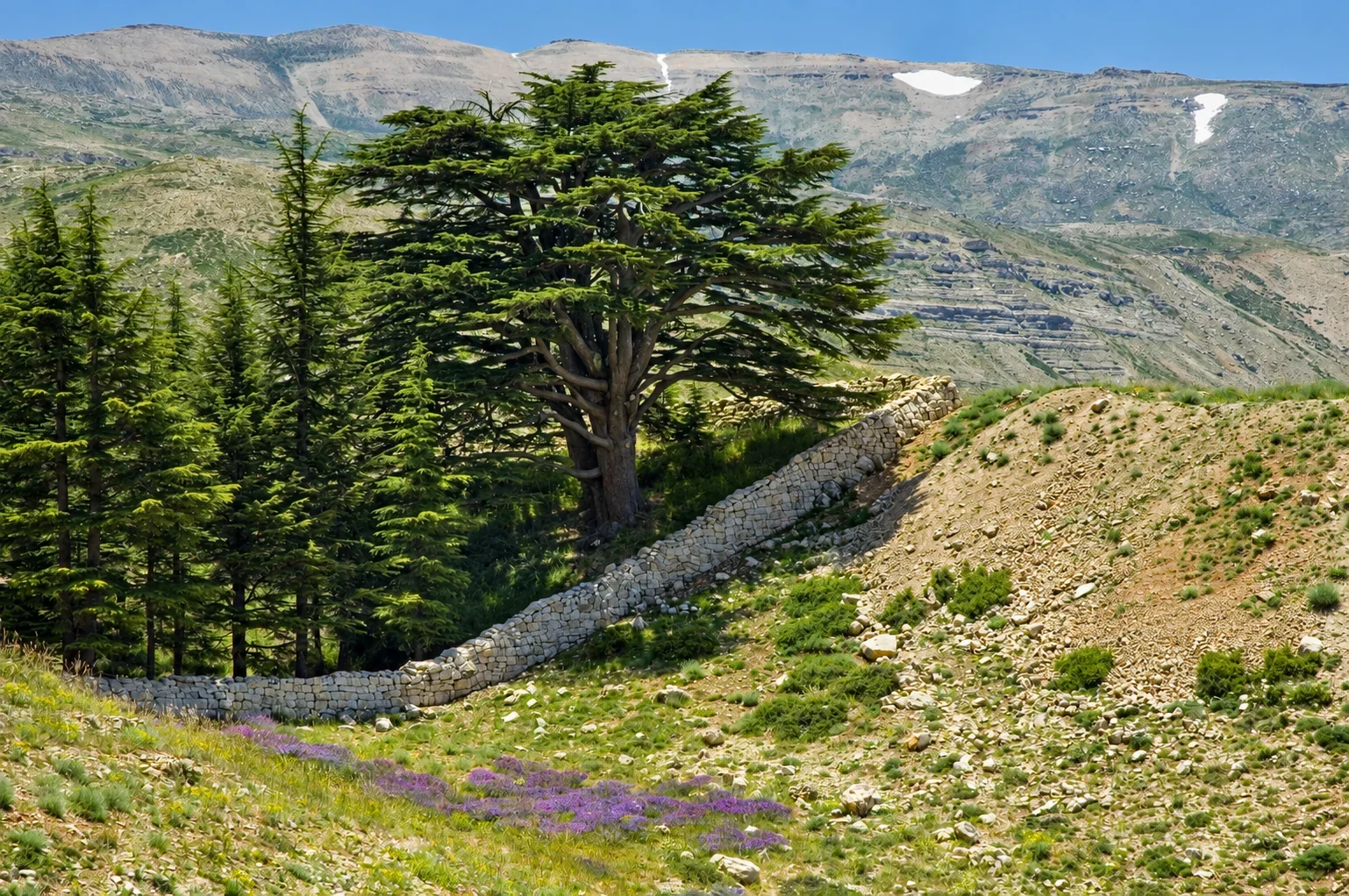
The forest itself was long under threat. In the late nineteenth century, measures were taken to protect the remaining trees. Patriarch Boulos Massaad appealed to Rustom Pasha, governor of Mount Lebanon, and a stone enclosure was built around the forest to prevent further cutting.
This enclosure marked a change in the way the cedar was regarded. After centuries in which the tree had primarily been valued as a resource, the surviving trees were increasingly seen as a heritage to be preserved.
The forest of Bsharri therefore holds something paradoxical: it is both the memory of a disappearance and evidence of continuity.
Photo Gallery — The cedars of Bsharri

Sources and references
UNESCO World Heritage Centre — Ouadi Qadisha (the Holy Valley) and the Forest of the Cedars of God (Horsh Arz el-Rab) — heritage status, historical importance and the surviving cedar forest.
UNESCO — World Heritage nomination documentation, property no. 850 — historical protection of the forest and the intervention of Patriarch Boulos Massaad and Rustom Pasha.
Melkan Bassil — At the Heart of Our Forests, “The Cedars of Bsharri” — earlier photographic and editorial work on the forest and its landscape. Your book already described Bsharri as a small forest of surviving trees beneath the high peaks of Mount Lebanon.
Visit Byblos aims to provide documented content based on identified sources. Some information may nevertheless evolve as research advances and new discoveries are made. Documented corrections or additional information are welcome.
Explore Lebanon’s other cedar forests and discover, step by step, the landscapes in which the cedar has endured through the centuries. Jaj, Tannourine, Bsharri and the Shouf: each panorama reveals a different relationship between the tree, the rock and the mountains.
Move along the line to discover another virtual tour.