
The Phoenician Figurines — 360° Virtual Tour
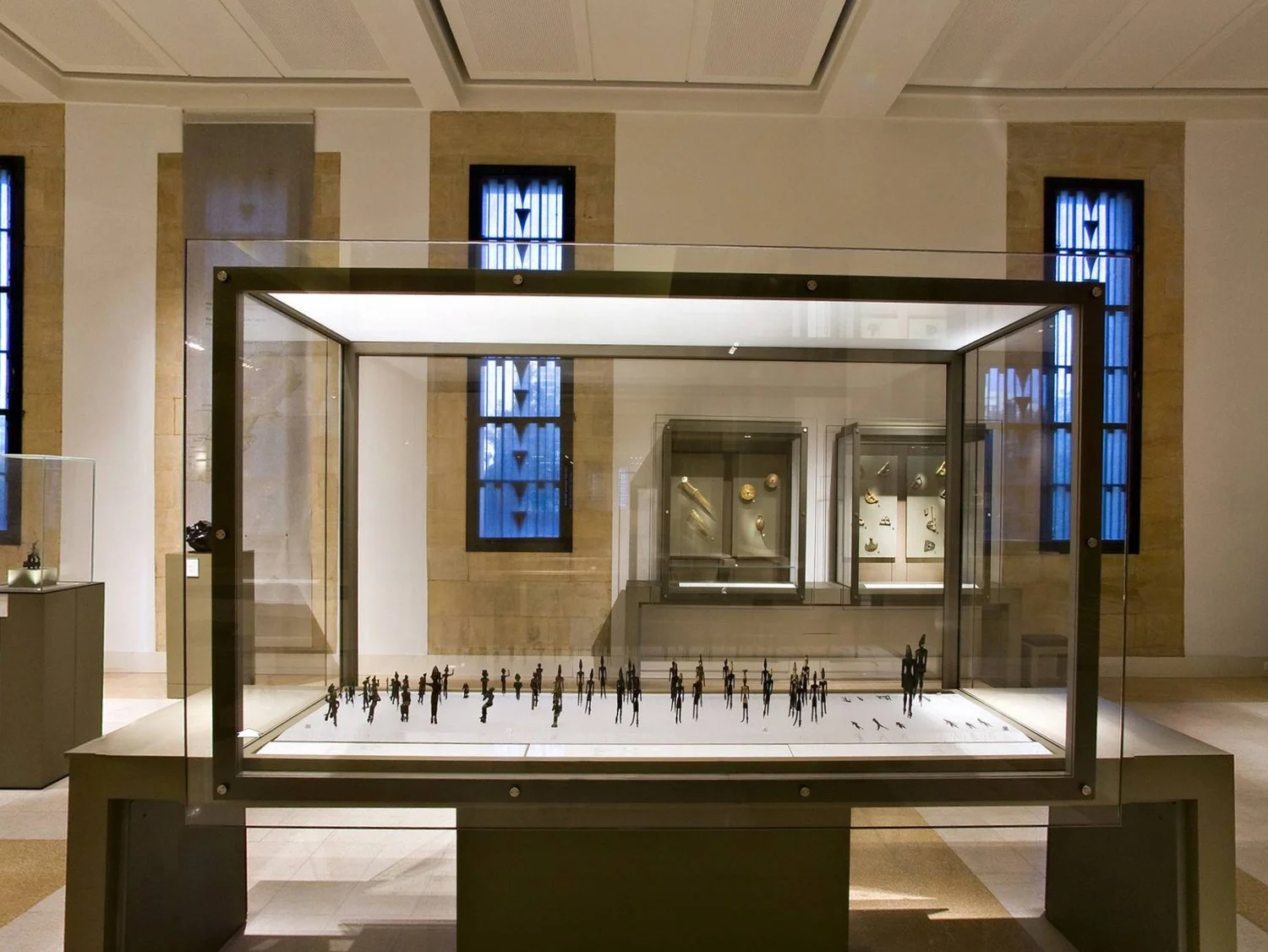
On the first floor of the National Museum of Beirut, a series of dark silhouettes emerges behind the glass displays.
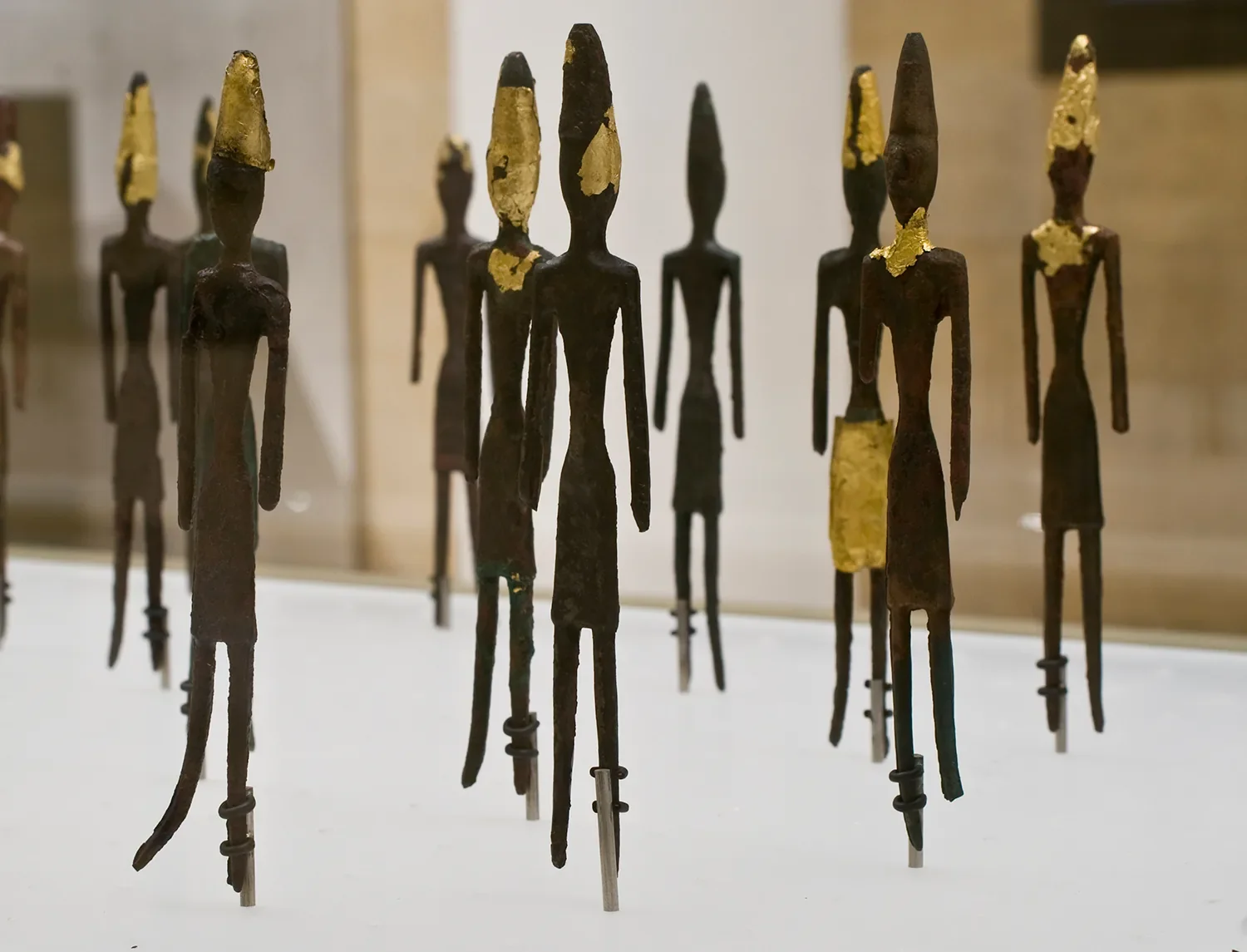
Some still preserve fragments of gold leaf.
Others retain only their elongated, almost abstract forms.
These small figurines discovered in Byblos cross time with a silent presence.
They seem to belong to a ritual world where offering, gesture and memory held a central place.
Phoenician Treasures of Byblos
Most of the figurines displayed in this room were discovered within the Temple of the Obelisks in Byblos, a major religious complex dating back to the 2nd millennium BCE. Excavations conducted by Pierre Montet and later Maurice Dunand revealed hundreds of objects deposited as votive offerings: bronze statuettes, ceremonial weapons, jewelry and ritual artifacts.
The famous Phoenician figurines of Byblos are distinguished by their elongated silhouettes and highly stylized forms. Some were covered with gold leaf, emphasizing the precious nature of these religious offerings. Their appearance combines Levantine and Egyptian influences, reflecting the constant exchanges between Byblos and the great Mediterranean powers of the ancient world.
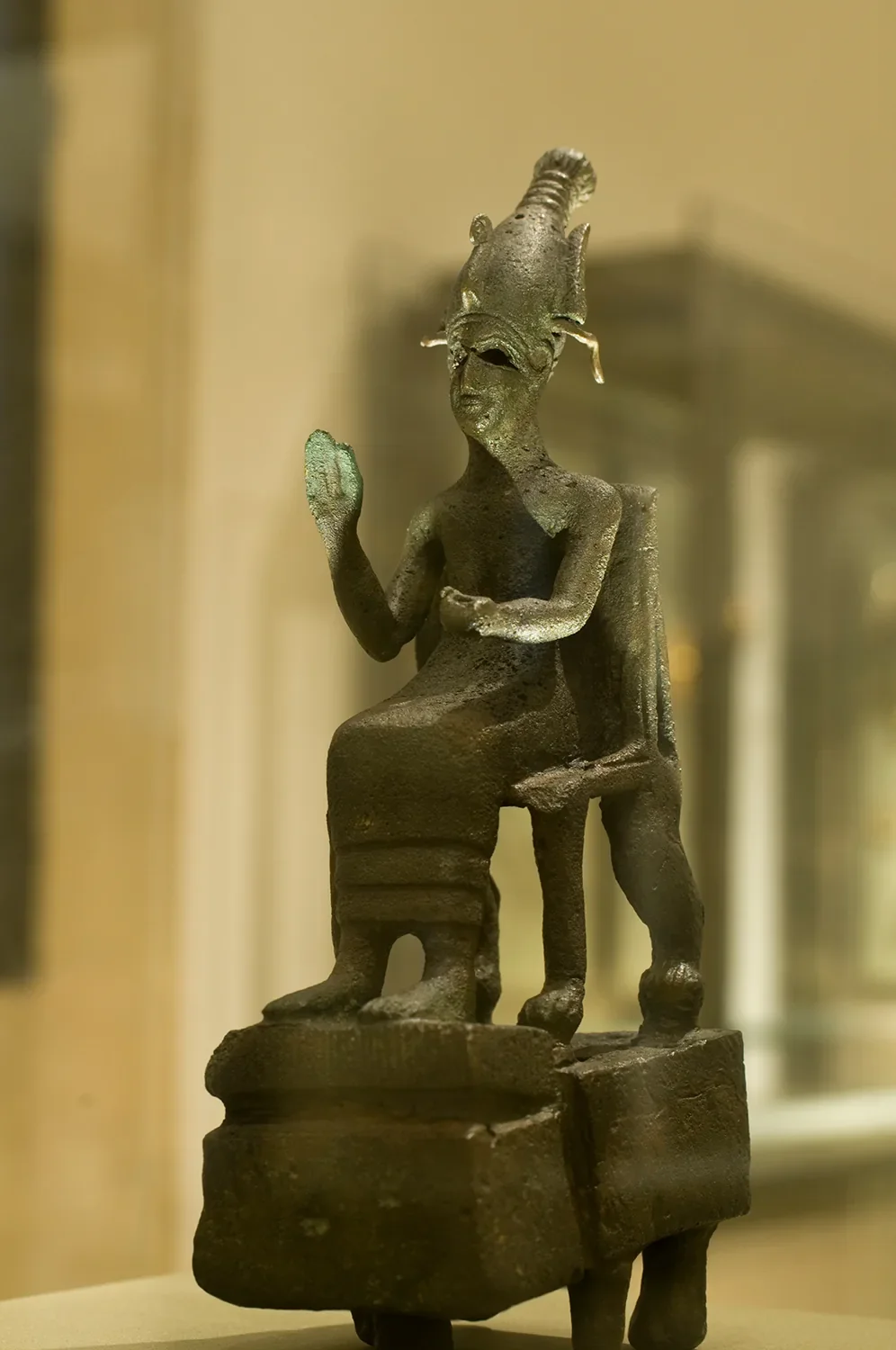
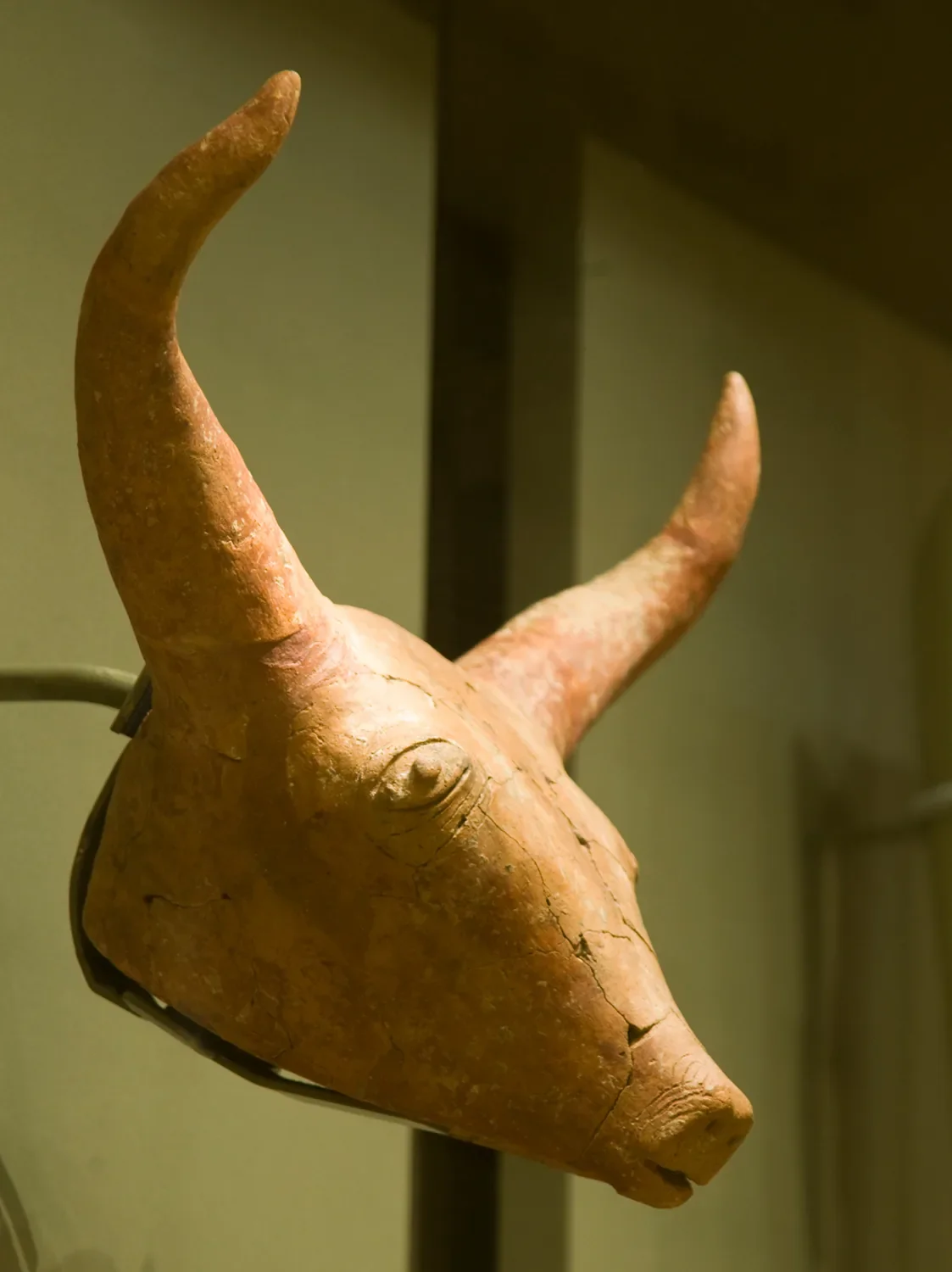
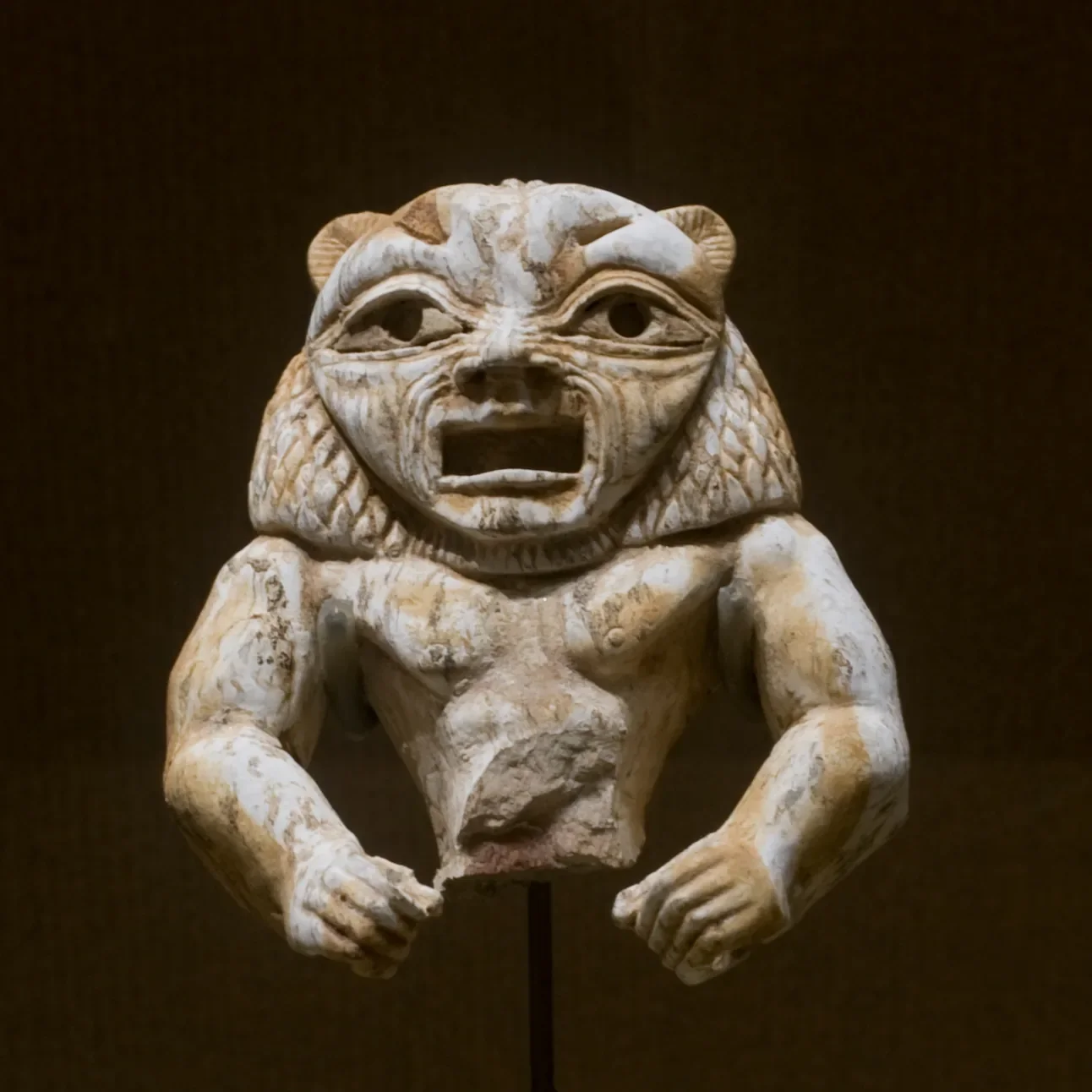
Other objects displayed nearby — ritual masks, divine statuettes, animal figures and ceremonial fragments — help reveal the importance of sanctuaries within the life of the ancient city.
Today, the National Museum of Beirut preserves Lebanon’s main archaeological collections. The artifacts originating from Byblos remain among the country’s most important Phoenician collections and provide essential insight into the religious and artistic practices of the ancient Levant.
Explore the Phoenician Figurines in 360°
The panorama reveals several showcases gathering objects uncovered on the archaeological site of Byblos: votive figurines, bronze statuettes, ritual objects and fragments connected to the city’s ancient sanctuaries.
Photo Gallery — Objects and phoenician figurines
Explore the collections of Byblos at the National Museum of Beirut through two immersive 360° virtual tours. From the sarcophagus of King Ahiram to the Phoenician figurines of the Temple of the Obelisks, each panorama reveals another dimension of Byblos’ archaeological legacy — between royal power, ancient rituals and the origins of the alphabet..
Walk along the line to discover a new virtual tour.